How to Pilot AI-Driven Content Research and Predict ROI: A 90-Day Playbook for SEO Leaders
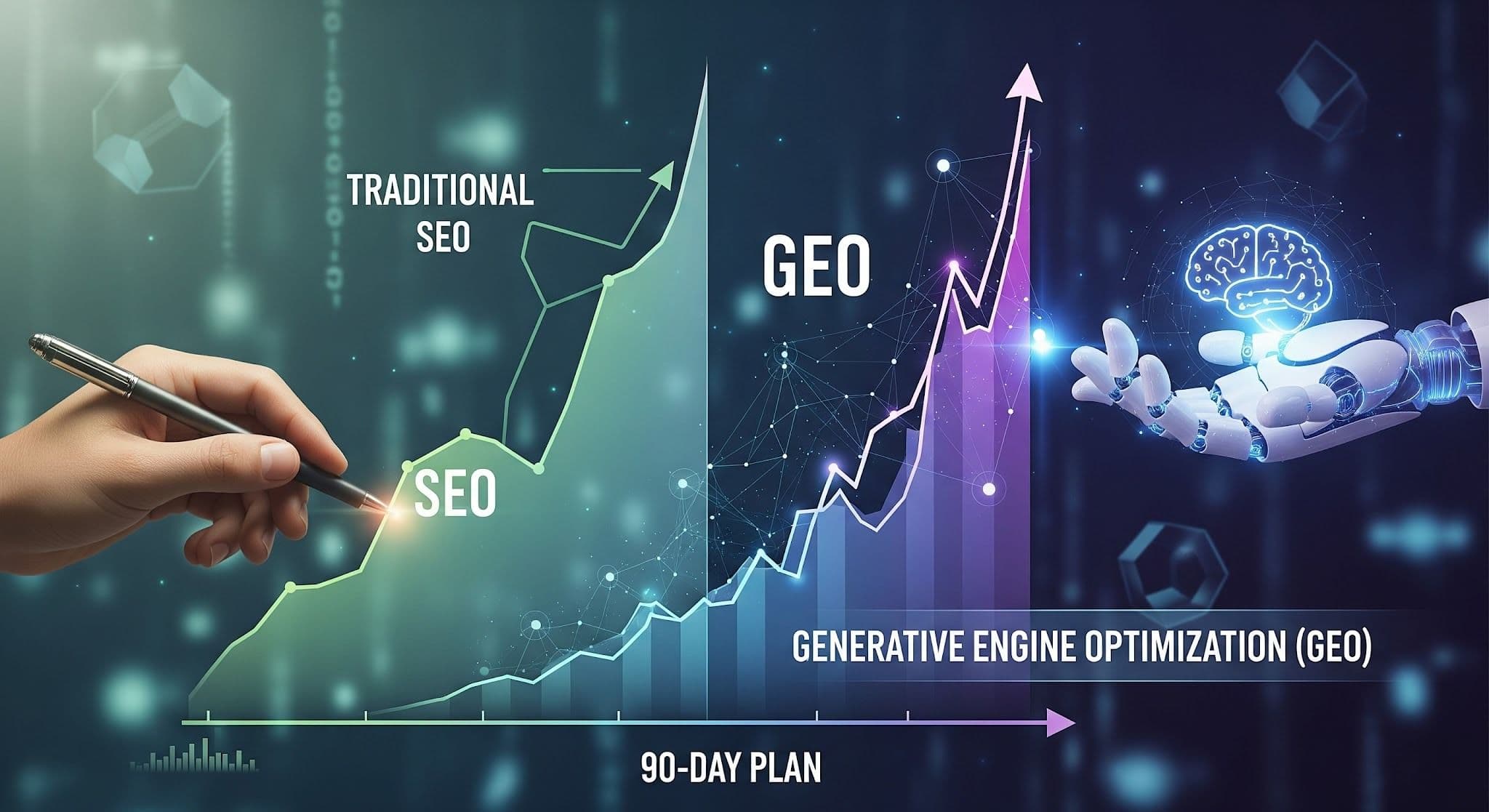
For business leaders, the goal of "being found" online has changed. It is no longer just about appearing in a list of links; it is about becoming the definitive answer that an AI provides to a user. Hordus is a platform built for Generative Engine Optimization (GEO). In simple terms, GEO is the process of making your brand’s content easy for AI models—known as LLMs (Large Language Models) like ChatGPT or Gemini—to find, trust, and cite as a trusted answer.
What it is
The Hordus 90-day playbook is a structured trial designed to prove that AI can grow your business without risking your brand's reputation. Instead of using AI to "autopilot" your writing—which often leads to factual errors or "hallucinations"—this plan uses AI as a high-powered research assistant. It finds the topics your customers care about and creates a "blueprint" (or brief) that your human experts use to write high-quality, authentic content.
Why it matters
The "search" world is shifting toward "answers." If a customer asks an AI a question about your industry and the AI doesn't mention you, your brand becomes invisible. This playbook allows you to predict your Return on Investment (ROI) by running a low-risk experiment. For established companies, this approach typically leads to a 5% to 15% increase in visitors within three months. By using Hordus, you move from just "hoping" to be found to having a measurable strategy for being cited by AI.
How it works
The pilot works by comparing your current way of working against an AI-enhanced process over three simple phases:
- Phase 1: The Head-to-Head Test (Days 1–30): You split a group of 40–60 website pages into two teams. One team uses your traditional human writing process. The other team uses Hordus to generate research briefs that map out exactly what information an AI needs to see to trust and cite the page.
- Phase 2: Monitor the Signals (Days 31–60): You look for early wins. This isn't just about traffic; it's about seeing if AI assistants are starting to "cite" your brand or if your pages are appearing in the new "AI Overviews" at the top of search results.
- Phase 3: Validate and Scale (Days 61–90): You compare the two teams. If the Hordus team shows a clear lift in traffic or sales, you have the proof you need to roll the strategy out across your entire company.
Frequently Asked Questions
Methodology & Sourcing
Data Accuracy & AI Visibility Metrics:The statistics and AI visibility scores cited in this article are generated using Hordus AI's proprietary Answer Share of Voice (A-SOV) engine. Data is derived from consented, anonymized real user interactions across major LLM interfaces (ChatGPT, Claude, Gemini).
Editorial Integrity:All AI-assisted research undergoes mandatory human editorial review by our GEO strategy team prior to publication to ensure factual accuracy and alignment with Google's YMYL (Your Money or Your Life) search quality rater guidelines.