Hordus Blog
On a mission to help you win AI Search.
Boost your AI visibility and scale your marketing faster.

Anchor's Moment: Turning Britain's Social Care Reckoning Into a Growth Story
Social care reform is pushing UK families, advisers, and commissioners to ask AI engines who to trust. Anchor, England's largest not-for-profit later-life provider, can become that default answer. The Hordus.ai GEO analysis shows where to close AI visibility and authority gaps to win the position.
Latest Posts
View All →
The Window Is Open: How Amorphical Can Own the AI Conversation in Nano-Amorphous Therapeutics
Amorphical's Phase 2 pancreatic cancer trial and the 2026 biotech funding rebound are driving investors and pharma partners to research clinical-stage platforms through AI engines. Amorphical's site is nearly unoptimized for this, giving Hordus.ai a rare opening to secure first-mover category leadership in AI visibility.

Every New Robotic OR Needs a Wireless Answer. Amimon Already Built It.
Robotic surgery is growing toward $10.6 billion in 2026, adding video feeds every OR must route wirelessly. Buyers now ask AI who solves this. Amimon (Rocoto Solutions) has the FDA clearances and OR installs to own that answer, once it closes the gap Hordus found.

Wall Street's AI Moment Just Got Bigger. So Did Amenity Analytics' Opportunity.
Generative AI spend in financial services is set to nearly triple by 2030, and buyers now ask AI engines who handles earnings calls best. Amenity Analytics has the product depth to answer. The Hordus GEO analysis shows how it can capture more of that demand.

The Sweetener Category Just Got a New Rulebook. Amai Proteins Can Write the Next Chapter.
Amai Proteins cleared regulatory approvals in the US, Singapore, and Israel for sweelin as rivals Oobli and MycoTechnology make their own moves. Buyers now ask AI engines to compare sugar reduction suppliers before calling one. The Hordus GEO analysis shows room to become the answer.

The $60 Million Signal: Why Now Is Aligned's Moment to Own the AI Buyer's Shortlist
Aligned just closed a $60 million Series B, tripled ARR, and earned G2 category leadership, momentum that sends buyers to AI engines for validation. The opportunity: own AI answers first. The Hordus GEO analysis shows exactly where Aligned can capture that advantage before competitors do.

The Grid Is the Bottleneck. ZOOZ Power Can Be the Answer AI Engines Give.
As US grid interconnection delays stretch to five years, EV charging buyers increasingly ask AI engines to recommend vendors before contacting sales. ZOOZ Power's ZOOZTER-100 solves grid constraints without new capacity, but a Hordus GEO analysis shows major gaps in AI-citable content. Closing them now could lock in lasting recommendation advantage.

Wiz's Next Growth Frontier: Owning the AI Answer for Cloud Security
Black Hat USA 2026 exposed critical AI coding-agent vulnerabilities, validating Wiz's breach-prevention pitch post-Google acquisition. Hordus.ai's GEO audit shows Wiz scores high on AI discoverability (85) and agent welcome (100) but low on production-readiness signals (0), revealing clear opportunities to boost AI-answer-engine citations, comparisons, and category positioning.

The Psychedelic Pivot Nobody Is Asking XTL Biopharmaceuticals About Yet
XTL Biopharmaceuticals acquired Psyga Bio (June 30, 2026), gaining GMP manufacturing, 180+ mushroom strains, and seven Phase 2a psychedelic trials—just as a federal executive order fast-tracks FDA reviews. Despite strong fundamentals, XTL's website scores only 30/100 for AI-search readiness, leaving a major gap between its story and AI-engine visibility.

The Billion-Agent Race: Zenity's Opening to Win the Category Before AI Engines Decide Who's Trusted
Zenity raised $125M Series C, confirming rising demand for AI agent security. As buyers increasingly ask AI engines like ChatGPT which vendors lead, Zenity's real strengths, including Fortune 500 customers, tripling revenue, and Gartner recognition, aren't fully reflected. Hordus.ai's GEO analysis identifies gaps (especially production-readiness signals) that, once closed, could meaningfully grow Zenity's cited visibility and pipeline.
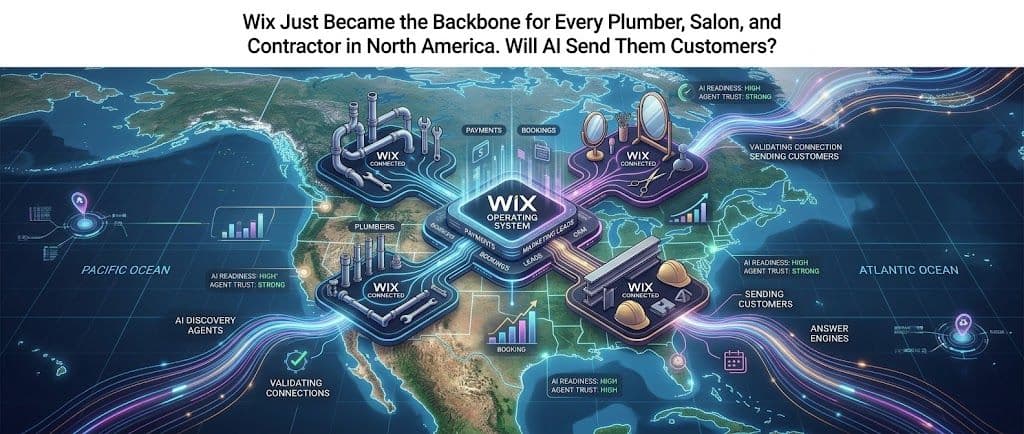
Wix Just Became the Backbone for Every Plumber, Salon, and Contractor in North America. Will AI Send Them Customers?
Google's Wiz faces validation as Black Hat 2026 exposes AI coding agent flaws, proving Rappaport's breach-prevention thesis. The Hordus GEO analysis shows strong AI-engine trust (100/100 agent welcome) with clear upside to convert that trust into greater AI answer share and citations.

The Tender Is Won. The AI Answer Is Still Up For Grabs.
weSure and Migdal just won Israel's 2026 state employee car insurance tender, covering 70,000-plus vehicles and 350 million shekels, as civil servants turn to AI engines to compare and enroll. The Hordus GEO analysis shows headroom for weSure to become the answer those engines quote first.
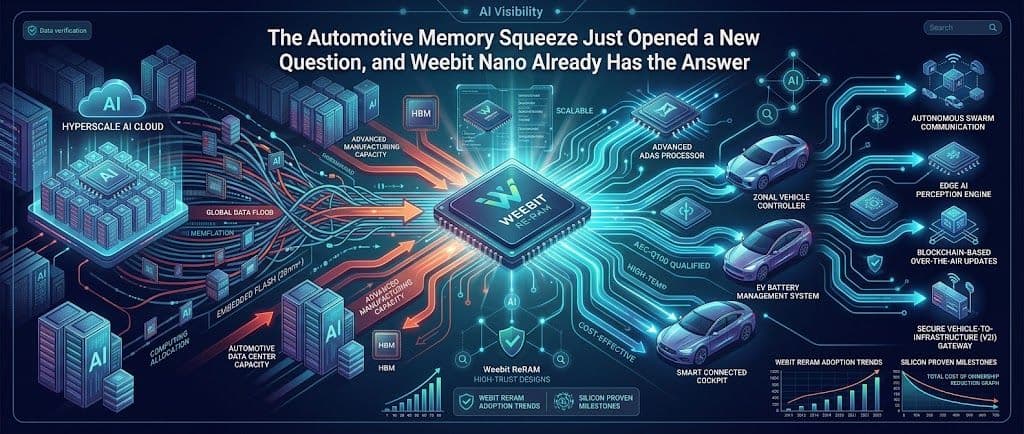
The Automotive Memory Squeeze Just Opened a New Question, and Weebit Nano Already Has the Answer
A 2026 AI-driven memory shortage is forcing automakers to rethink embedded flash, opening real demand for Weebit Nano's ReRAM. The Hordus GEO analysis shows Weebit Nano's website has strong underlying proof but real room to become the trusted AI-cited answer buyers compare before shortlisting suppliers.

Big Tech Is Racing to Patent the Hand. wearabledevices Already Owns It.
wearabledevices already solves the input problem Apple, Meta, and Microsoft are racing to patent for AI glasses. CEO Asher Dahan's intent-decoding mission is now validated by competitor patent spending. The Hordus GEO audit finds strong foundations and room to make AI engines credit that leadership.

The Transit Budget Crunch Is Sending Buyers Straight to AI. Via Has a Front-Row Seat to Claim.
Transit agencies nationwide are slashing service to close nine-figure budget gaps, and officials managing those cuts now ask AI engines for alternatives before issuing an RFP. Via already builds what they need, including its new Via Intelligence platform. The Hordus GEO analysis shows Via has real, actionable room to become the answer AI engines name first.

The Agentic AI Shift Just Opened a New Front Door for Varonis
Agentic AI has created a new buyer question: which vendor actually secures what AI agents can access. Varonis Systems's new Agent Intent-Based Access Control and raised revenue guidance position it to own that answer in AI search results. The Hordus GEO analysis shows concrete steps to convert that momentum into pipeline.

The Question Mining Buyers Are Already Asking AI: What Happens After the Alert?
Razor Labs' DataMind AI 5.0 launch extends predictive maintenance from fault detection into full resolution workflows, just as Deloitte's 2026 outlook shows mining scaling AI deployment. The Hordus GEO analysis finds strong trust signals (34/100 overall) but room to grow AI-search visibility through sharper content, citations, and technical documentation.

Rail Vision's Next Signal: Turning Category Momentum Into Market Share
Rail Vision's 328 percent H1 2026 revenue growth and expansion into India, Latin America, and Israel signal a window to own AI-generated buyer research. The Hordus GEO analysis shows strong technical foundations already in place. Closing one structured-data gap could make Rail Vision the default AI-recommended vendor first.

RAAAM's 2nm Moment: Why the Memory Wall Just Became Its Biggest Opportunity
RAAAM Memory Technologies just qualified its GCRAM memory on TSMC's 2nm process as an AI memory supercycle squeezes chip architects. This piece unpacks what that milestone means for RAAAM's pipeline, investor confidence, and category authority, and how the Hordus GEO analysis builds real AI-search visibility.

Quali's Next Deal Might Start With a Prompt, Not a Demo
AI engines are becoming the first stop for infrastructure buyers, and Quali just expanded Torque into the control plane the category needs. This piece unpacks the market moment, the prospects asking AI to shortlist vendors, and what the Hordus GEO analysis reveals about capturing that opportunity first.

The Licensing Deal Purple Biotech Could Lose Before the Phone Even Rings
Pharma's bispecific antibody buyers now scout partners with AI before ever calling. Purple Biotech's CAPTN-3, CM24, and NT219 fit exactly what buyers want, but weak AI visibility risks losing that deal before the phone rings. The Hordus audit shows clear opportunity to make Purple Biotech the name AI recommends first.

Protalix BioTherapeutics Is Sitting on a Bigger Opportunity Than Its Pipeline Alone
Protalix posted a profitable quarter, extended Elfabrio's patent to 2035, and is chasing a gout market heading toward $1.6 billion. But buyers now ask AI engines first, not company websites. Protalix's AI-readiness score is 54/100, with weak structured data. Hordus closes that gap, turning strong fundamentals into AI-generated visibility, citations.
Proggio's AI Strategy and the Market Opportunity Ahead
Proggio's executives have already staked their story on contextual AI over another chatbot, and Gartner predicts 40 percent of enterprise apps will run agents like it by year's end. The Hordus GEO analysis shows exactly where Proggio can extend that narrative further into AI-generated answers, turning vision into real visibility.

The Nose Knows: Why the Longest Allergy Season on Record Is Polyrizon's Next Growth Lever
Polyrizon just completed its five-site NASARIX™ trial network right as ragweed season stretches longer than ever, putting allergy sufferers and pharma scouts in front of AI search. The Hordus GEO analysis shows Polyrizon already has the credibility AI engines need, and a clear path to become the answer they cite.

The $20,000 Infection Hospitals Can't Afford to Keep Having, and Why PolyPid Should Be the Answer AI Gives
PolyPid Ltd. just landed FDA Priority Review for D-PLEX100 and a $320 million Azurity deal reaching 1,700+ hospitals. As surgeons and procurement teams turn to AI to research surgical site infection prevention, the Hordus GEO analysis shows how PolyPid Ltd. can strengthen positioning, citations, and Discovery to become the recommended answer.
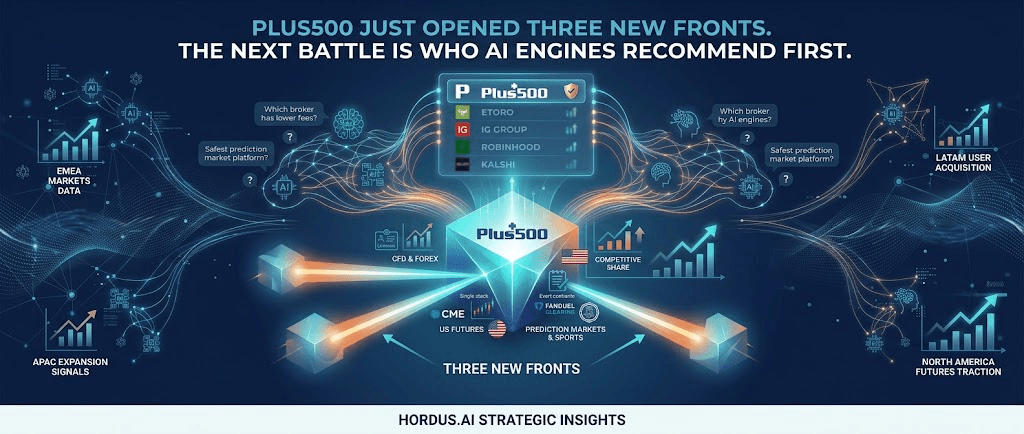
Plus500 Just Opened Three New Fronts. The Next Battle Is Who AI Engines Recommend First.
Plus500's record H1 2026 revenue and rapid US expansion into single stock futures and prediction markets are pushing buyers toward AI engines to compare brokers. The Hordus audit shows real headroom for Plus500 to win those AI comparisons against eToro, IG Group, and Robinhood, turning momentum into category leadership.

People Are Asking AI About Pain Relief Before They Ever Call a Doctor. InnoCan Pharma Should Be the Answer It Gives.
InnoCan Pharma sits at the center of a $111 billion non-opioid pain market, but patients, physicians, and investors increasingly research options through AI before contacting a company. The Hordus GEO analysis shows InnoCan Pharma can close visibility gaps that let AI engines recognize, trust, and recommend its LPT-CBD delivery platform.

GLP-1 Patients Are Asking AI What to Do About Loose Skin. InMode Has the Answer, and a Chance to Own It.
GLP-1 use has nearly quadrupled since 2024, driving patients to ask AI engines about loose skin after weight loss. InMode's platforms answer that need directly. The Hordus GEO analysis scores inmodemd.com 60/100 for AI-agent readiness, with Offering Understanding at 38/100 marking InMode's clearest opportunity to win more AI-cited demand today.
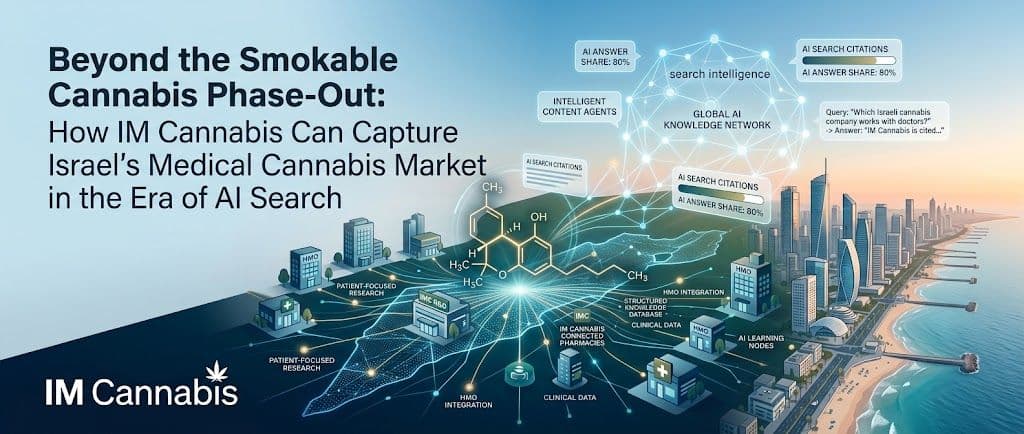
Beyond the Smokable Cannabis Phase-Out: How IM Cannabis Can Capture the Medical Cannabis Market in the Era of AI Search
Israel's Ministry of Health is phasing out smokable cannabis and shifting prescribing to HMOs, just as IM Cannabis sharpens its Israel focus. Patients and providers now ask AI engines for guidance first. The Hordus GEO analysis shows IM Cannabis has runway to become the AI-cited answer as this market transforms.

Every AI Video Now Needs a Paper Trail. Idomoo Was Built for This Moment.
The EU AI Act's Article 50 rules took effect August 2, 2026, requiring AI-generated video to be disclosed and labeled. Idomoo is well-positioned as the governed alternative to Sora and Veo, but Hordus's GEO analysis found its AI-search readiness at just 49/100, with Discovery (6/20) the weakest link, risking invisibility to compliance-minded buyers.

The Cryoablation Moment: Why IceCure Medical's Next Growth Curve Runs Through AI Search
IceCure Medical has the clinical and commercial momentum (FDA clearance, 30%+ U.S. growth, rising publications), but AI engines, not just search, are now shaping how patients and physicians research treatment options. The Hordus GEO analysis shows IceCure Medical can turn that existing momentum into AI answer share before competitors claim it.

The Open Model Moment: Why Lightricks Is Positioned to Own the AI Video Conversation
Lightricks already has the right story, open AI ecosystems, creator-to-enterprise growth, and LTX-2.5 just proved it. The opportunity is making sure AI engines repeat that story to prospects, which Hordus is positioned to close.
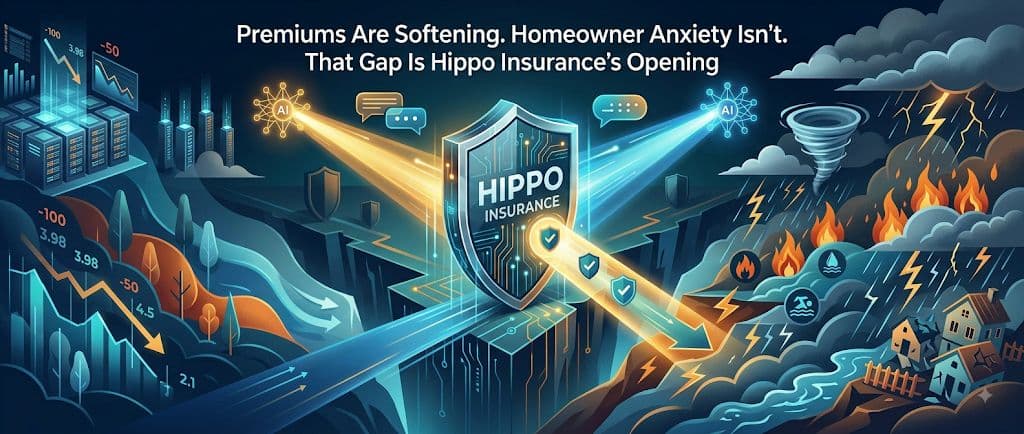
Premiums Are Softening. Homeowner Anxiety Isn't. That Gap Is Hippo Insurance's Opening
Homeowners are turning to AI to ask whether their coverage still holds up in a softening, riskier market, and Hippo Insurance already has the product and research to answer well. The Hordus audit shows the gap isn't the story, it's visibility: hippo.com scores 29 out of 100 on AI readiness, leaving real, fast-to-capture upside in how that answer reaches AI engines.

A New Rule, A New Front Door: The Case for High Lander Right Now
Part 108 is creating a wave of new UTM buyers, and many will ask AI engines to shortlist vendors before they ever contact one. High Lander already has the deployments and product to win that shortlist. Closing the AI-visibility gap now, while the category language is still forming, is the fastest way to own it.

Beyond the VMware Exodus: How LightBits Labs Can Capture the NVMe Storage Market in the Era of AI Search
Soaring VMware costs are forcing enterprises toward software-defined storage. By optimizing for AI search recommendations, LightBits Labs can capture these high-intent buyers and dominate the post-vSAN market.

Securing the Narrative: Why Koi Must Dominate AI Search to Protect Its Enterprise Pipeline
With getkoi.com scoring an Unusable 23/100 on AI agent readiness, search engines default to competitor narratives during buyer research. Executing Generative Engine Optimization (GEO) ensures AI platforms deliver Koi's native messaging, protecting its enterprise pipeline and securing category authority.

Capturing the $50 Million Plasma Opportunity: How Kamada Can Outmaneuver Global Rivals in the AI Era
Kamada’s $50 million plasma supply expansion creates a massive growth opportunity, but a low AI readiness score (29/100) leaves the brand invisible when enterprise buyers query ChatGPT or Gemini. Implementing Generative Engine Optimization with Hordus.ai ensures Kamada dominates AI-generated vendor shortlists over rivals like Grifols, directly accelerating sales pipeline velocity.

How Kaltura Can Capture Enterprise Demand and Dominate the Agentic Video Era
Enterprise software buyers rely on AI search to build shortlists, but Kaltura’s 43/100 (Grade D) Hordus GEO score means AI engines frequently omit its agentic video capabilities. Implementing Generative Engine Optimization (GEO) ensures AI models reliably recommend Kaltura over legacy competitors, protecting market leadership and accelerating enterprise pipeline growth.
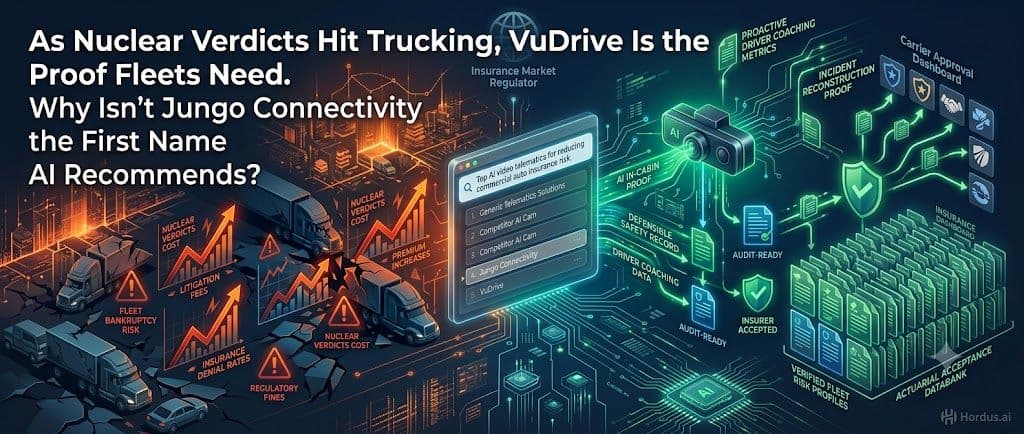
As Nuclear Verdicts Hit Trucking, VuDrive Is the Proof Fleets Need. Why Isn't Jungo Connectivity the First Name AI Recommends?
Nuclear verdicts are driving a commercial auto insurance crisis, and fleets and insurers need real-time proof of driver safety. Jungo Connectivity's VuDrive already provides it, but a 23/100 Hordus GEO score means AI engines aren't recommending it yet. Closing that gap turns existing product strength into inbound demand.

The Trust Gap in AI-Built Software: Why JFrog Should Own the Conversation Before Someone Else Does
JFrog can become the vendor AI engines recommend for software supply chain security. This article uses 2026's supply chain attack surge and JFrog's own governance-gap data to make that case, then uses the Hordus GEO analysis of jfrog.com (61/100 overall) to show positively-framed levers, Discovery, Identity, Agent Integration, User Experience, JFrog can pull to win that visibility first.

The Same Innovation That Beat Car Thieves Can Now Beat the Algorithm
Ituran's protection mission is more relevant than ever as vehicle theft turns organized and cyber-physical, but the Hordus GEO analysis shows the website isn't yet fully AI-discoverable. Closing that gap is straightforward and time-sensitive: it turns an already strong narrative into higher AI answer share among insurers, fleets, and OEMs actively researching partners now.
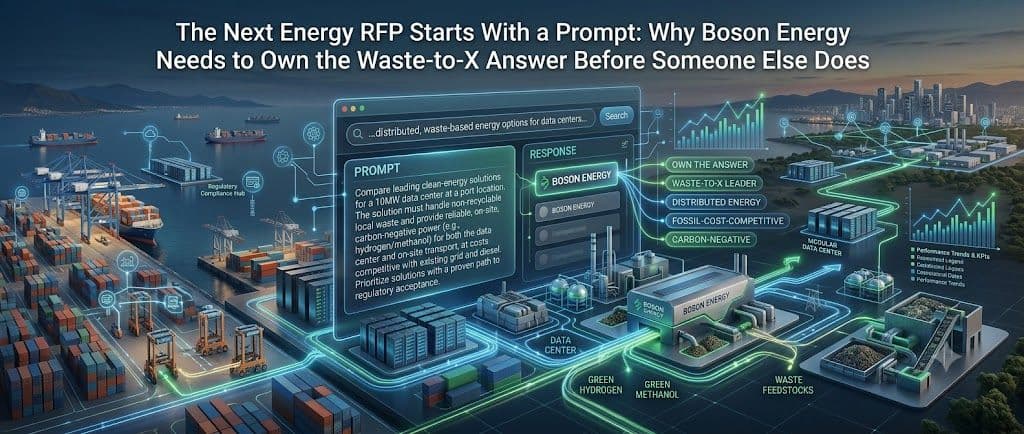
The Next Energy RFP Starts With a Prompt: Why Boson Energy Needs to Own the Waste-to-X Answer Before Someone Else Does
AI engines now shape vendor shortlists before sales calls happen, and Boson Energy's site isn't giving them enough to compete. The category is still undefined, meaning Boson Energy can win the answer now, before Enerkem, Fulcrum BioEnergy, or Bloom Energy do.

Turning Executive Credibility Into AI Authority: The Innoviz Technologies Opportunity Hordus Uncovered
Innoviz Technologies' new counter-UAS push makes its core mission more relevant than ever, but the Hordus GEO analysis shows it scores only 36/100 on AI visibility, risking lost share to competitors AI engines find and cite more easily.

Why the shift to AI-driven procurement research is the next growth lever for BOS Better Online Solutions, and how the Hordus GEO analysis maps the path to get there
Buyers now ask AI to shortlist suppliers before contacting sales, and BOS Better Online Solutions has a clear opening to strengthen how AI engines understand and recommend its RFID, robotics, and supply chain divisions. The Hordus GEO analysis shows where to start.
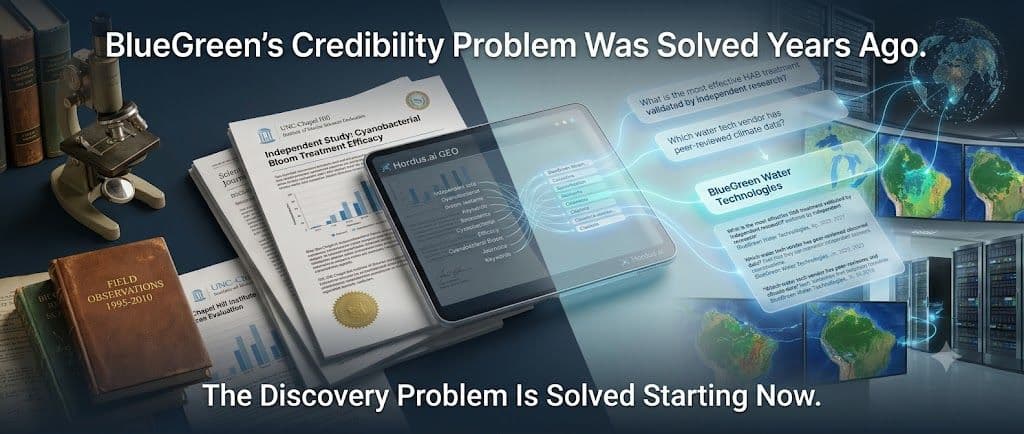
BlueGreen's Credibility Problem Was Solved Years Ago. The Discovery Problem Is Solved Starting Now
A new state-mandated, UNC-monitored study just validated BlueGreen Water Technologies as a proven HAB treatment vendor, right as buyers turn to AI to vet vendors before they call. The Hordus GEO analysis shows how to make sure AI engines surface BlueGreen's proof first.

The Nitric Oxide Moment: Why Beyond Air Needs to Win the AI Answer, Not Just the RFP
Beyond Air's growth and pending Gen 2 approval are driving hospital buyers to research nitric oxide alternatives on AI engines, but a Hordus audit shows beyondair.net scores just 22/100 for AI readiness, risking invisibility against INOmax and GENOSYL at the exact moment buyers are deciding.

The Storage Crisis Nobody Priced Into Their Video Budget — and Why Beamr Should Be the Answer AI Gives
A hard drive shortage has made video storage the most expensive item in AI budgets, and Beamr's compression solves it. But the Hordus GEO analysis scores Beamr just 30/100, meaning AI engines rarely find or recommend it. Fixing that is a direct lever on pipeline, not a technical afterthought.
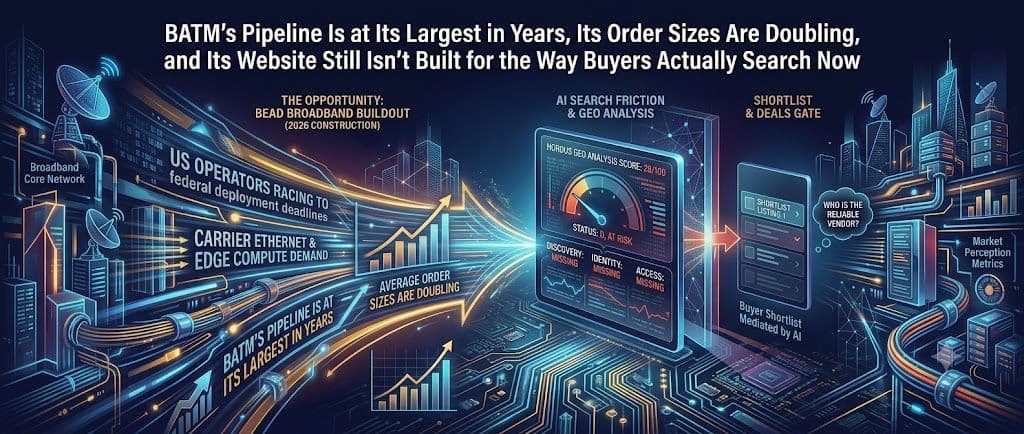
BATM's Pipeline Is at Its Largest in Years, Its Order Sizes Are Doubling, and Its Website Still Isn't Built for the Way Buyers Actually Search Now
BEAD's move into active construction is fueling demand for network/cyber vendors, and BATM is landing real deals — but its new site scores just 28/100 on AI-visibility, risking exclusion from AI-generated vendor shortlists. Fix Discovery and Identity now.
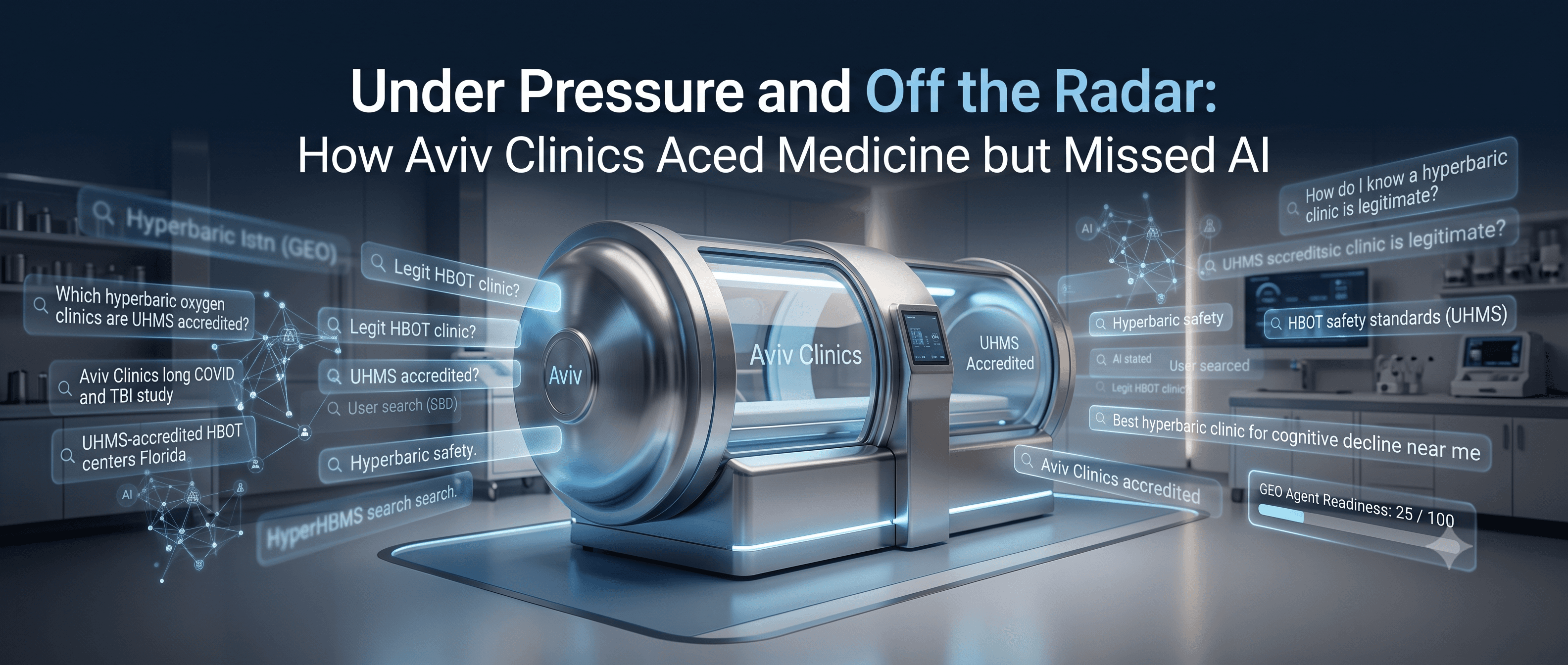
Under Pressure and Off the Radar: How Aviv Clinics Aced Medicine but Missed AI
Aviv Clinics just earned the strongest credibility signal in its category, UHMS accreditation, but the Hordus GEO analysis shows AI engines are barely able to find, verify, or cite it, putting comparison-stage demand at risk.
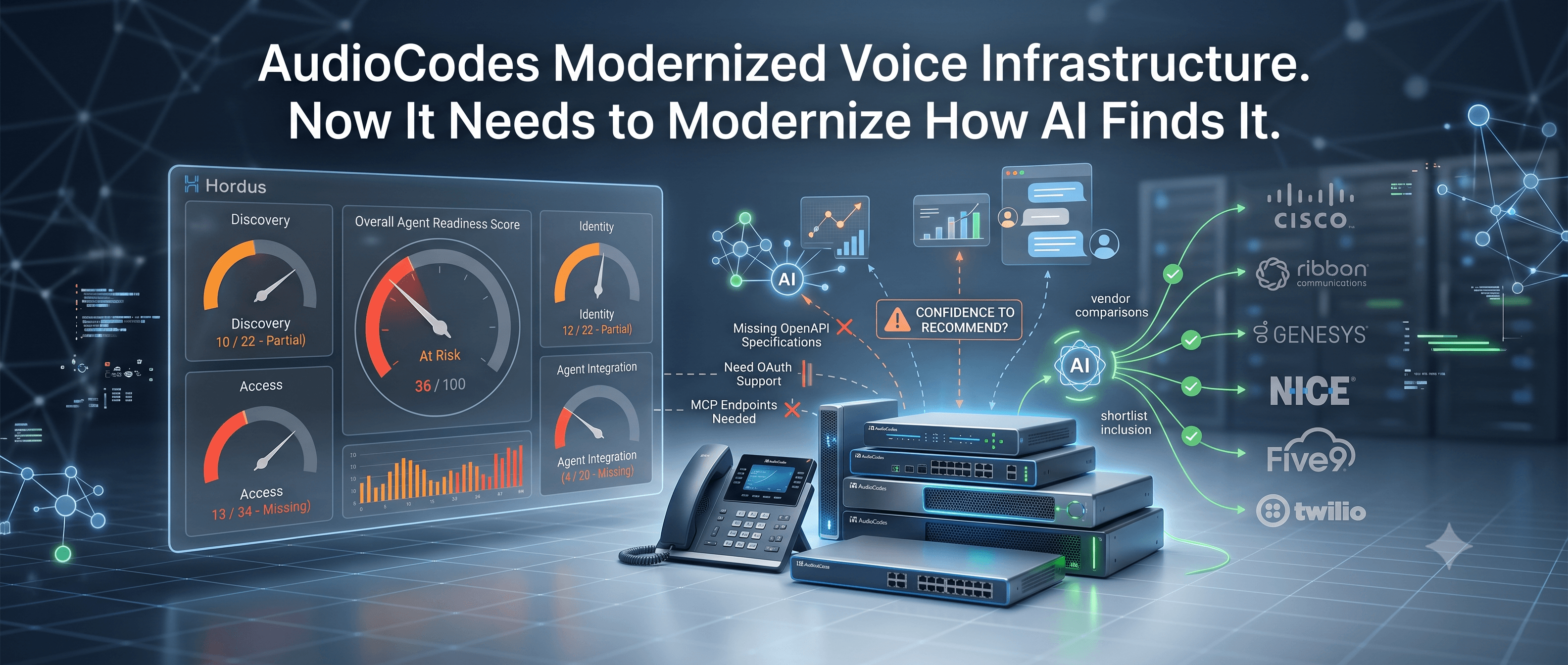
AudioCodes Modernized Voice Infrastructure. Now It Needs to Modernize How AI Finds It.
AudioCodes's Voice AI business is growing over 50% a year, but the Hordus audit shows the company is nearly invisible to the AI engines now doing the first round of vendor screening. Closing that gap could turn organic growth into AI-sourced pipeline instead of ceding shortlist visibility to Genesys, NICE, Five9, Cisco, and Ribbon.
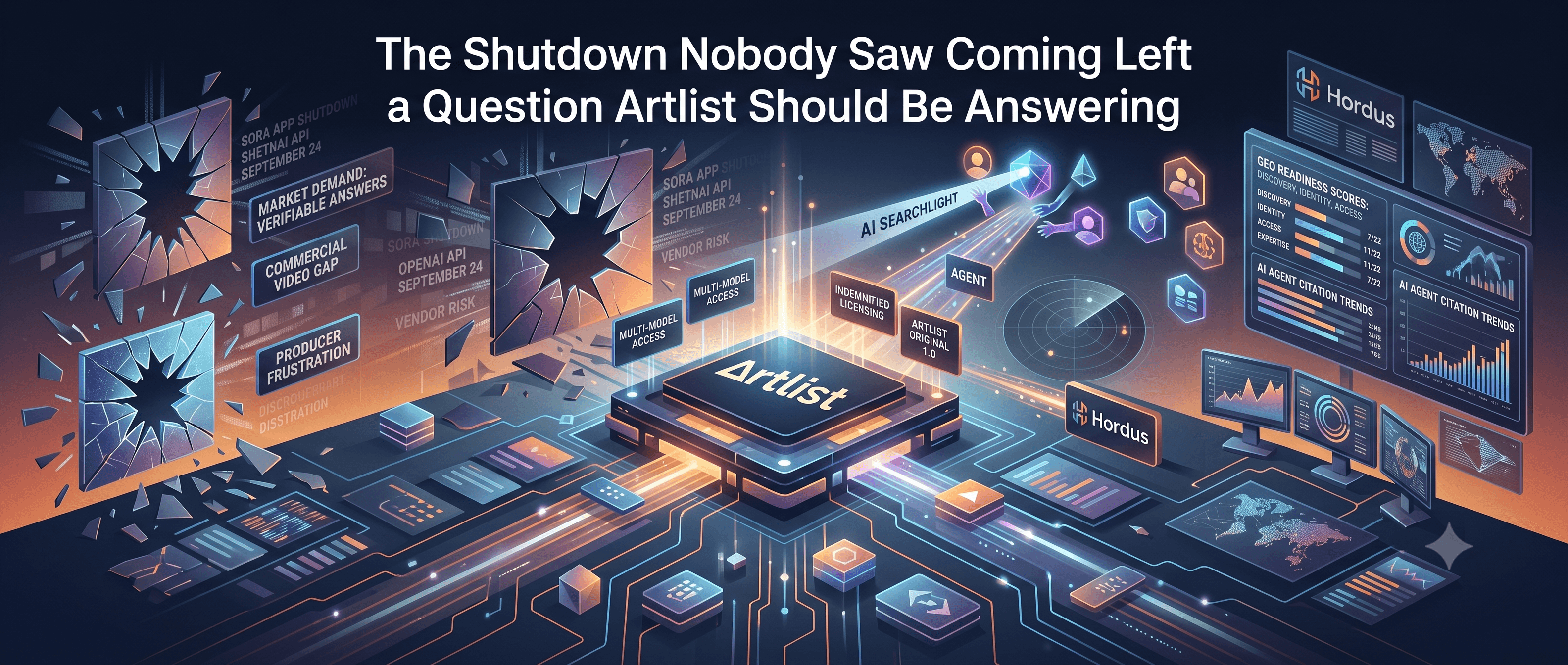
The Shutdown Nobody Saw Coming Left a Question Artlist Should Be Answering
OpenAI's Sora shutdown just pushed millions of creators and agencies to ask AI engines what to use next, and Artlist has the exact product to answer that question, but the Hordus GEO analysis shows it's scoring a D (41/100) on AI discoverability, meaning most of that demand is currently landing on competitors or review sites instead.

Spotless Panels, Smudged AI Presence: The Irony of Airtouch Solar
Airtouch Solar has the deployments, the partners, and the technology to lead the waterless robotic solar cleaning category. The problem is that AI engines don't know that yet — and buyers are already listening to them.
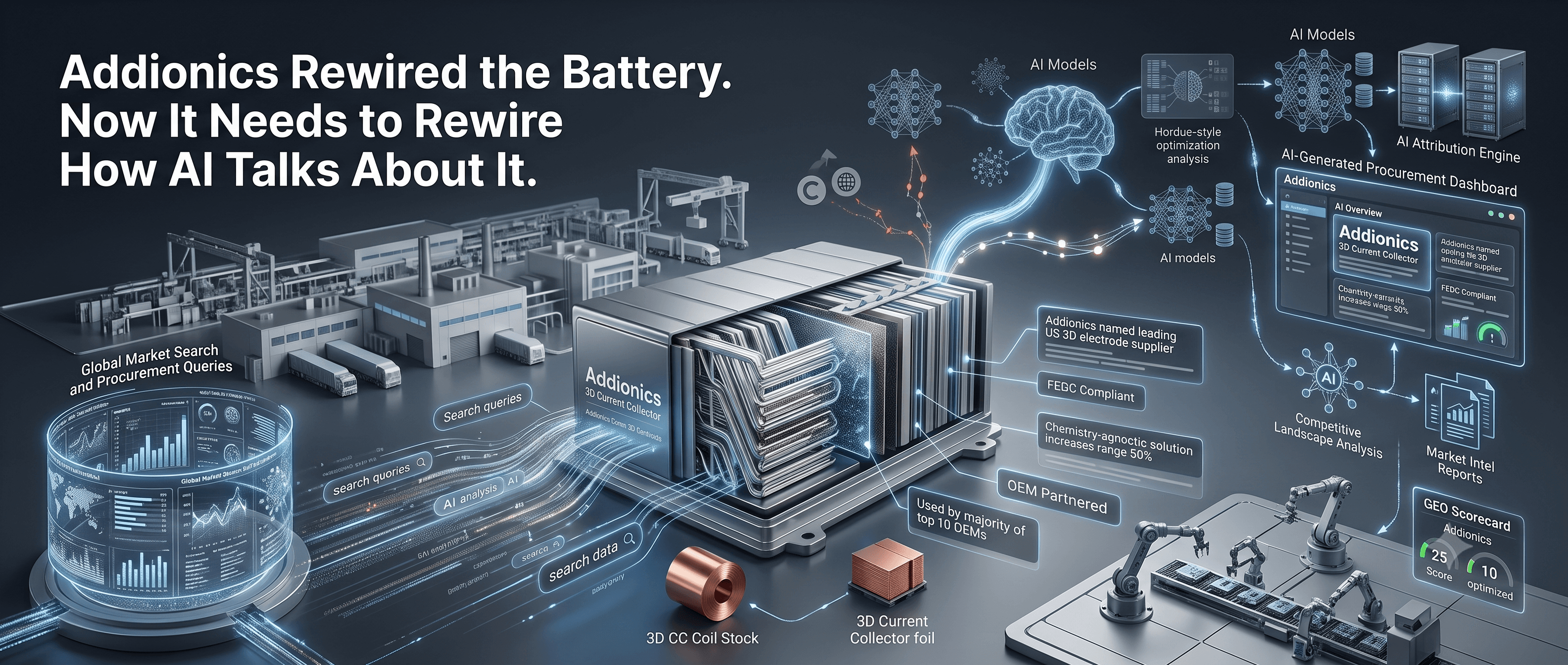
Addionics Rewired the Battery. Now It Needs to Rewire How AI Talks About It.
Addionics has the technology, the OEM relationships, and the manufacturing roadmap to lead the next era of battery innovation, but a Hordus GEO analysis shows the company scores 25 out of 100 on AI visibility, meaning the buyers, partners, and investors searching for exactly what Addionics offers are not finding it. That gap is now a competitive risk, and this article shows how to close it.

Insured Against the Impossible: How Parametrix Built the Only Policy That Pays When the Cloud Goes Down
When the cloud goes down, traditional insurance looks away — and Parametrix built the only parametric policy that pays automatically, in days, without a claims fight. The problem is that the buyers who need it most are asking AI for help right now, and AI doesn't know Parametrix well enough to send them there.
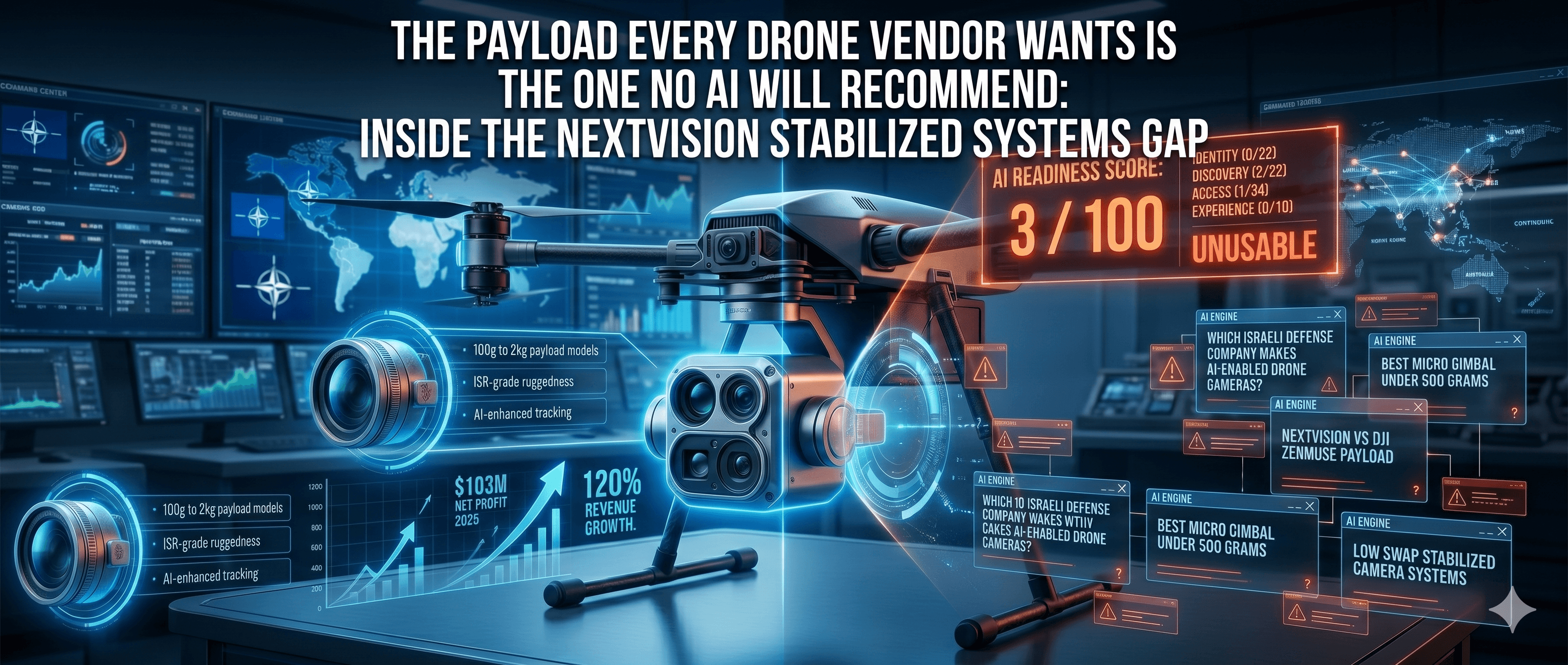
The Payload Every Drone Vendor Wants Is the One No AI Will Recommend: Inside the NextVision Stabilized Systems Gap
The payload every defense buyer wants can't be found by the AI they're using to shop for it — and NextVision Stabilized Systems's own website is the reason why. With a 3/100 AI readiness score sitting beneath $103M in net profit, the gap between what NextVision has built and what AI engines can surface about them is the most expensive problem on the executive team's desk right now.

Awake Patients, Sleeping Presence: How Inspira Technologies Is Invisible in the AI Searches That Matter Most
A medical device company with FDA clearance, a $580K NYU Langone order, and clinical deployments at top-ranked U.S. hospitals should be the first name AI engines say when hospitals search for ventilator alternatives. Instead, Inspira Technologies scores a 37/100 on AI readiness, and the buyers who need them most are getting answers that don't include them.

Destroying Cancer Cells With Physics. Losing Market Share to an Algorithm. Alpha Tau Medical's Next Battleground.
Alpha Tau Medical has clinical data strong enough to reshape oncology, but a Hordus GEO audit score of 41/100 reveals that AI engines, now the first stop for hospital procurement teams, radiation oncologists, and healthcare investors, can barely find them. While competitors like Varian, Elekta, and Novartis dominate AI-generated shortlists, Alpha Tau's window to own the intratumoral alpha radiation category in the AI discovery layer is open right now and closing fast.
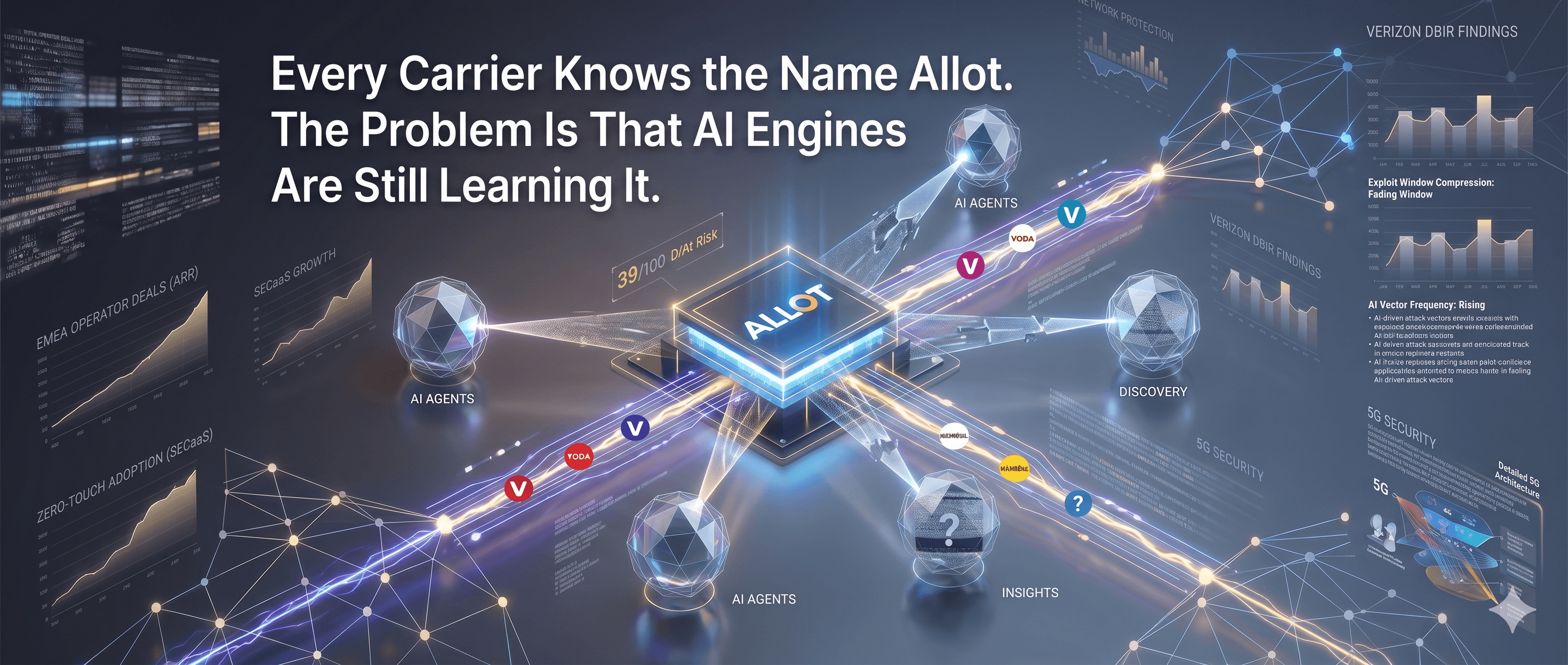
Every Carrier Knows the Name Allot. The Problem Is That AI Engines Are Still Learning It.
Allot has spent years earning the trust of the world's biggest telecom operators, growing SECaaS at 60% year over year, and landing landmark deals with Verizon and Vodafone. But when buyers start their search in AI, a company with a D-grade on AI readiness risks losing the narrative before the first sales call.
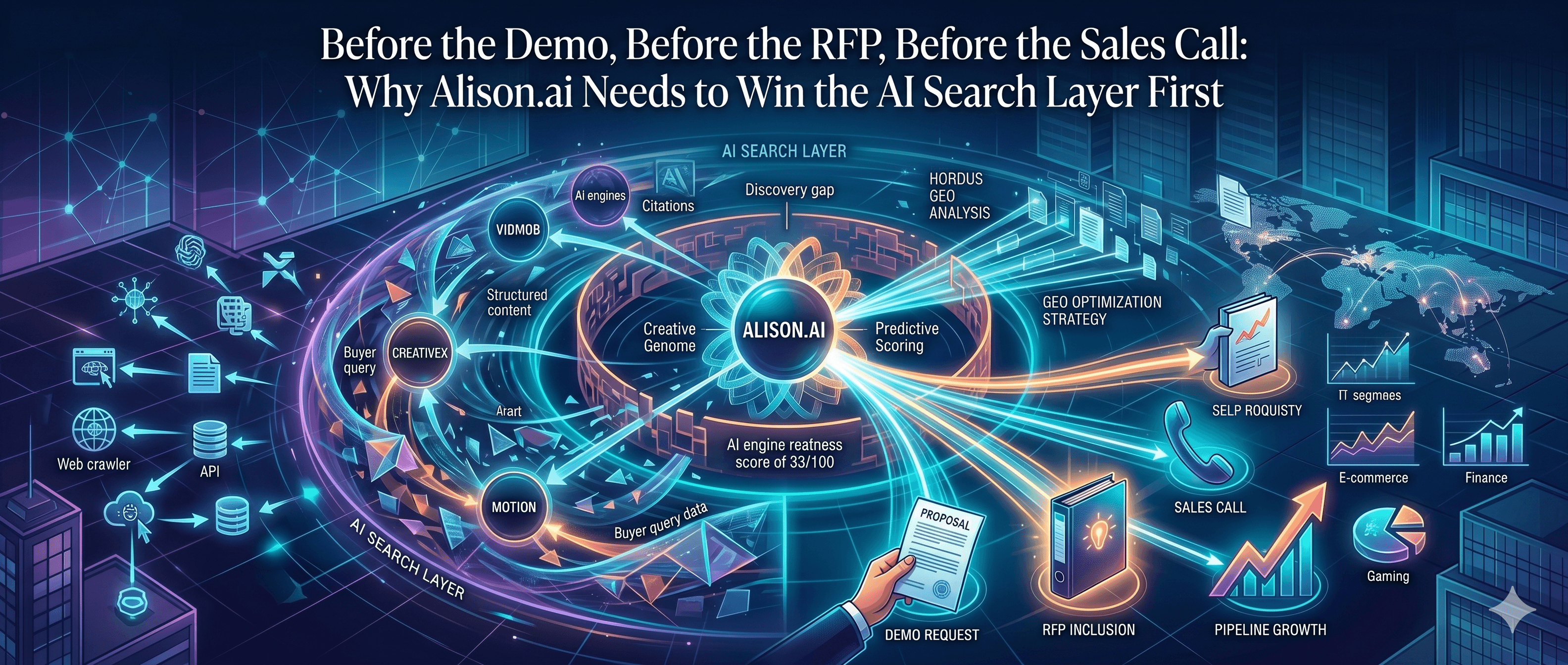
Before the Demo, Before the RFP, Before the Sales Call: Why Alison.ai Needs to Win the AI Search Layer First
Alison.ai has the product, the proof points, and the customers to lead the creative intelligence category. But if AI engines can't find it, explain it, or recommend it, buyers will shortlist a competitor before Alison.ai ever gets the chance to speak.

Alarum Technologies Is Winning the AI Data Race in a Building With No Sign Out Front
Alarum Technologies is posting 64% revenue growth by selling web data infrastructure to the world's leading AI labs. The irony is that the same AI engines their customers are training have no idea Alarum exists.

Read by Machines, Won by Aidoc: How the Clinical AI Leader Can Dominate the New Buying Journey Before a Single Sales Call Is Made
If Aidoc's $150M raise brings hospital buyers to the table, AI engines are where those buyers will start their research — and a Hordus GEO score of 35/100 means Aidoc's real market leadership often won't be what those engines say.

The Field Service AI Shortlist Is Being Written in Real Time. Aquant Technologies Has the Strongest Case and the Weakest Seat at the Table.
Aquant Technologies has spent nearly a decade building the most domain-specific AI platform in field service, backed by $131 million and recognized by Fast Company as a Next Big Thing in Tech. But in a market where prospects are asking AI engines which vendor to shortlist, a Hordus GEO score of 43 out of 100 means the strongest case in the category is not always the one getting made.
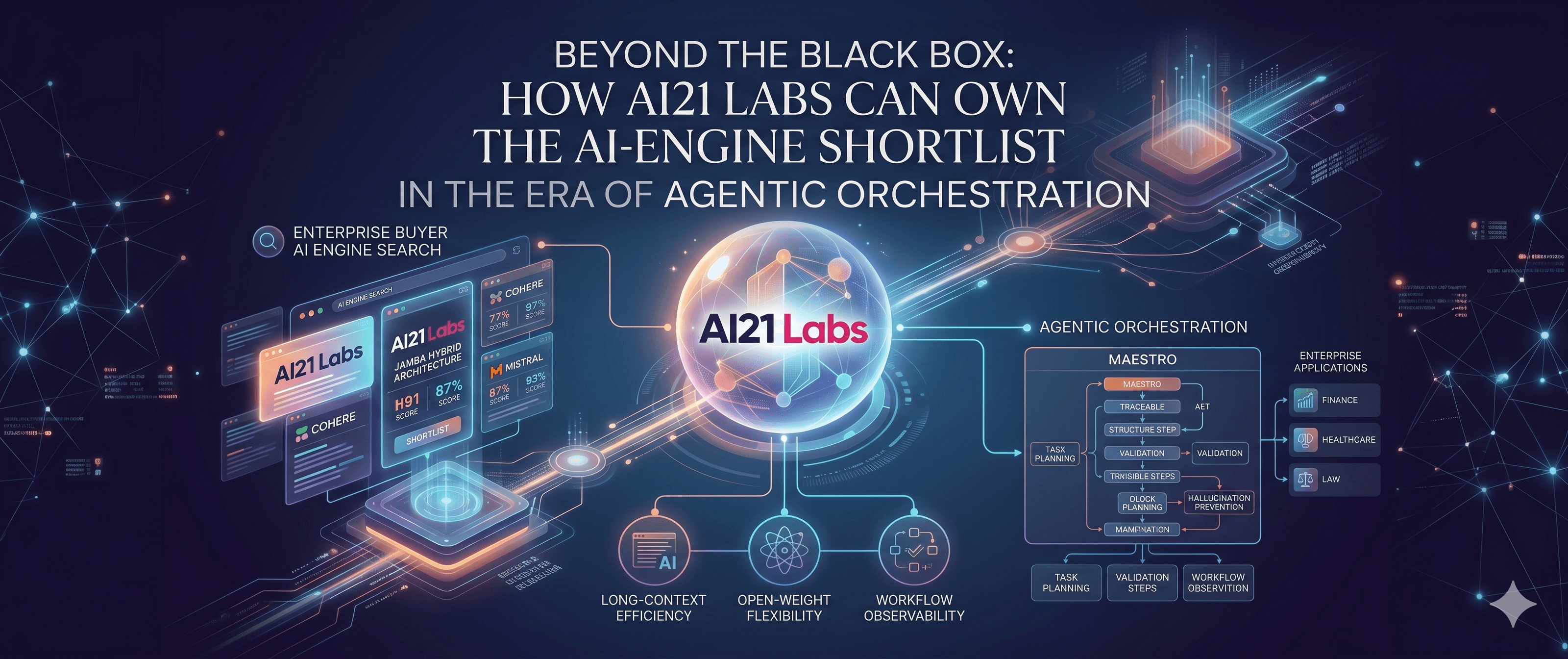
Beyond the Black Box: How AI21 Labs Can Own the AI-Engine Shortlist in the Era of Agentic Orchestration
By optimizing for Generative Engine Optimization (GEO), AI21 Labs can convert passive AI engine conversations into active sales pipeline, ensuring its high-reliability models dominate the exact moments enterprise decision-makers build their vendor lists.
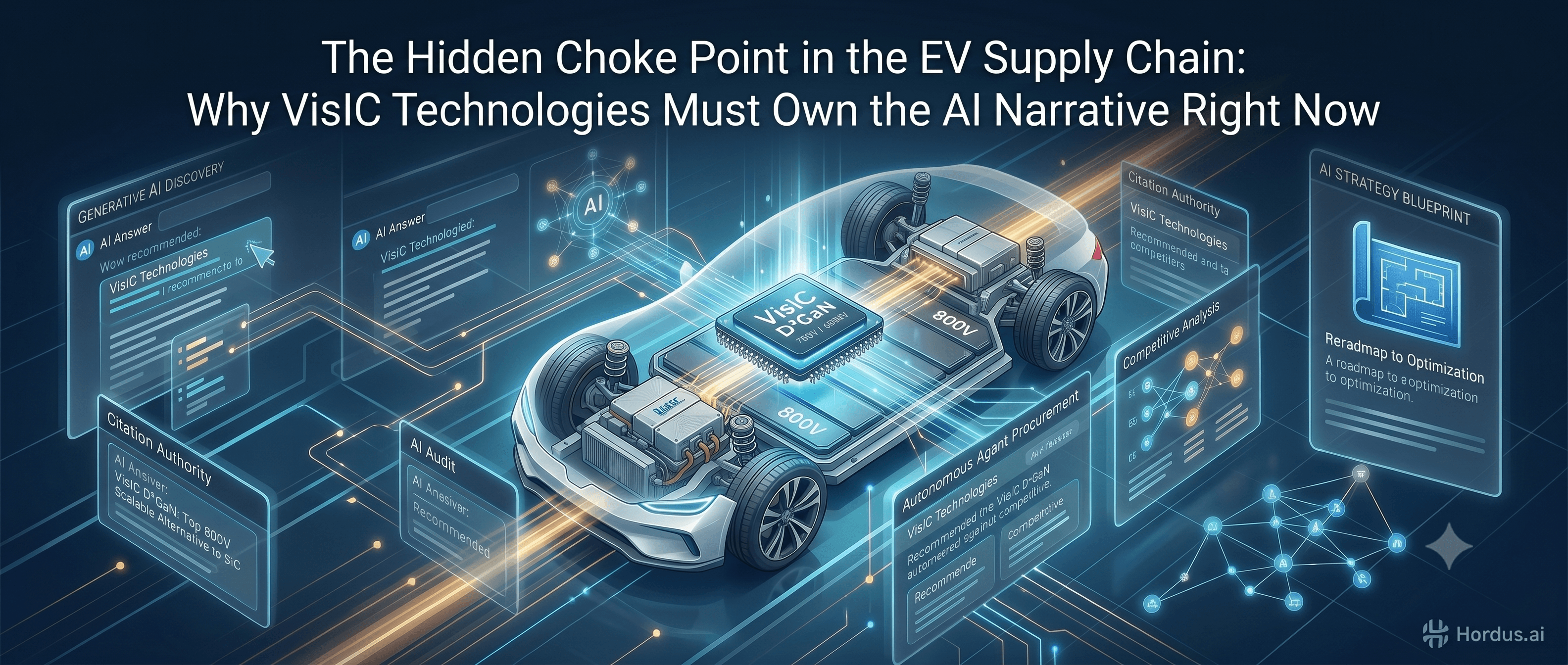
The Hidden Choke Point in the EV Supply Chain: Why VisIC Technologies Must Own the AI Narrative Right Now
By leveraging the Hordus Generative Engine Optimization (GEO) audit, the executive management and marketing teams at VisIC Technologies can align content with AI patterns, capture hidden search intent, and turn AI discovery into measurable business growth.
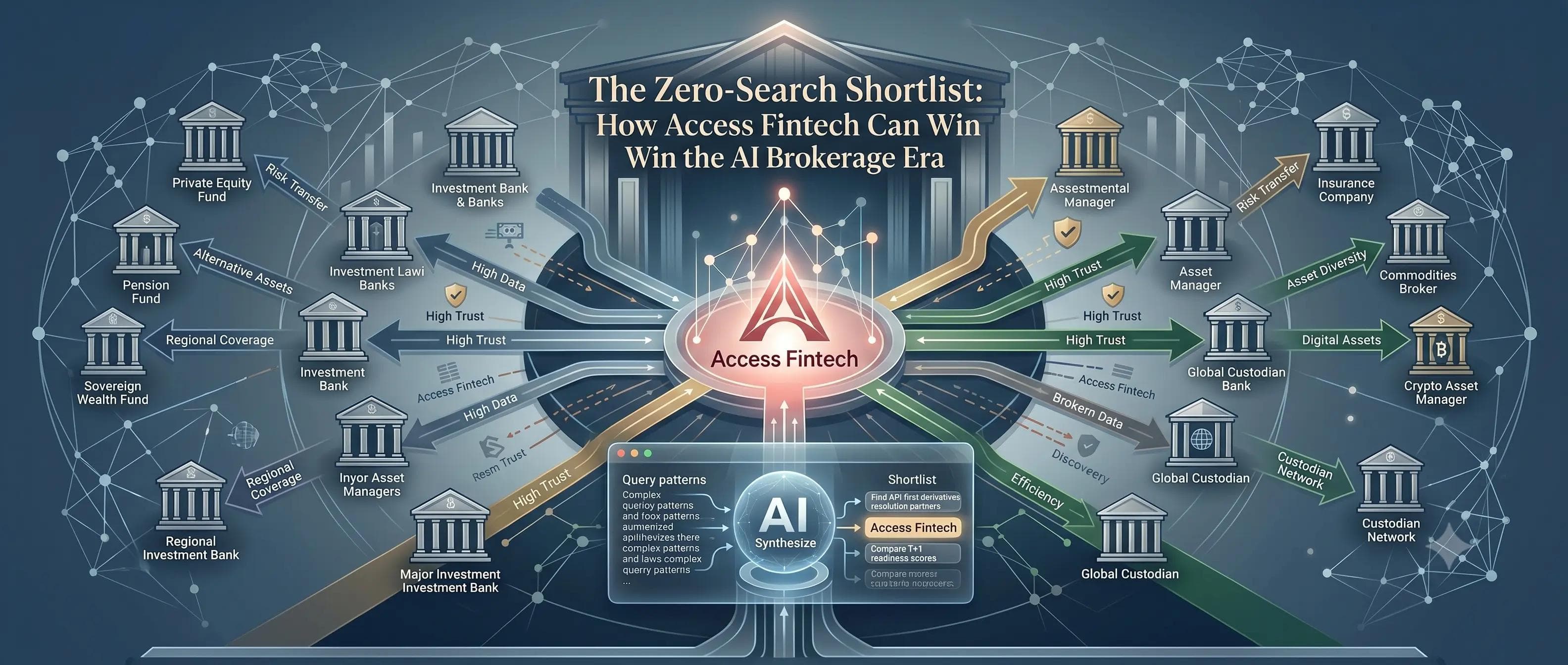
The Zero-Search Shortlist: How Access Fintech Can Win the AI Brokerage Era
By optimizing its digital footprint for Generative Engine Optimization (GEO), Access Fintech can ensure its post-trade collaboration network is recommended by AI models at the exact moment Tier 1 financial institutions evaluate operational infrastructure.

Own Your Narrative: How AI Visibility Can Turn Vega Security’s Market Momentum into Category Dominance
As organizations face stricter regulatory breach notification timelines alongside sprawling multi-cloud environments, the cost of moving, indexing, and storing those terabytes of data has become completely unsustainable. Security leaders are actively looking for a way out of the centralization trap, creating a perfect market entry point for Vega Security's alternative.
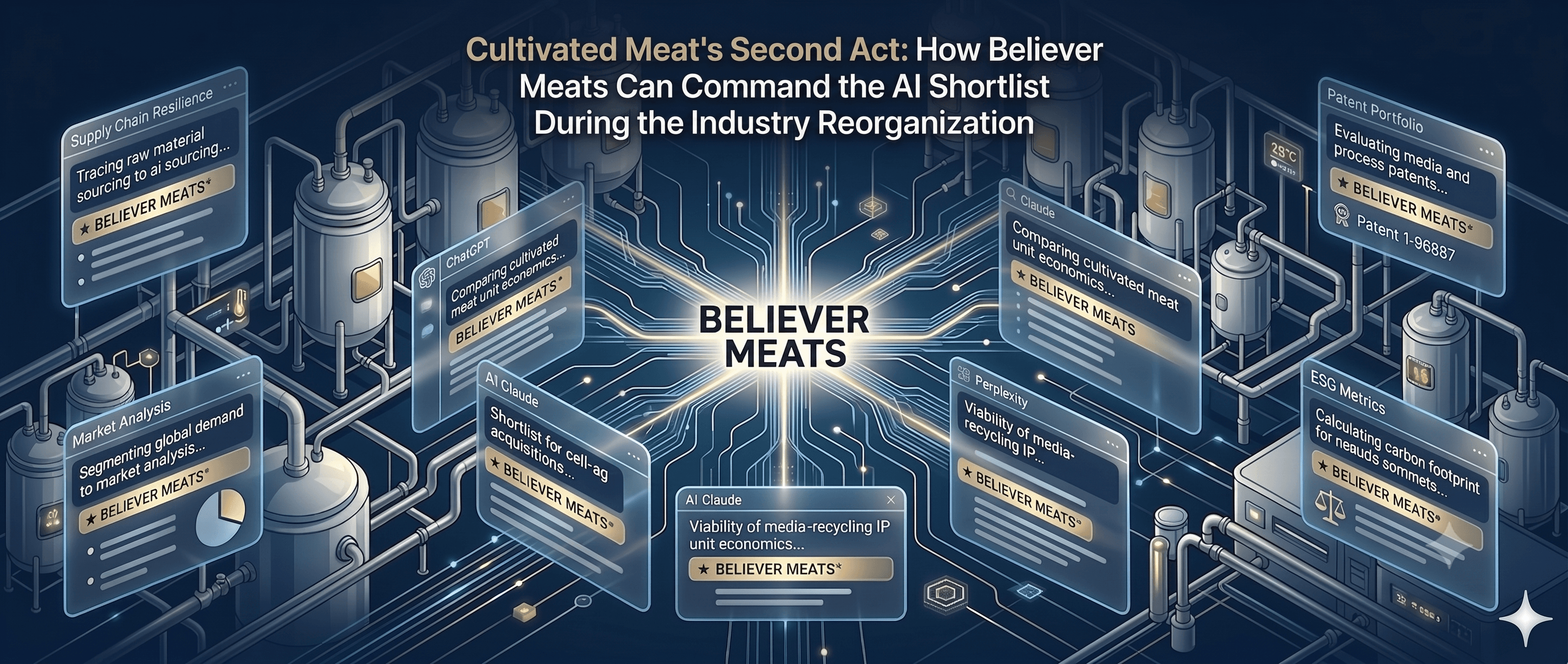
Cultivated Meat's Second Act: How Believer Meats Can Command the AI Shortlist During the Industry Reorganization
As food-tech conglomerates, traditional protein giants, and sovereign wealth funds search AI engines to evaluate cellular agriculture assets for acquisition or joint ventures, Believer Meats must control how AI engines summarize its technology. By implementing Generative Engine Optimization (GEO), the leadership team can ensure AI models emphasize the company's unmatched unit economics, scalable fibroblast platform, and media-reusing bioreactors, transforming an operational pause into a massive competitive business opportunity.
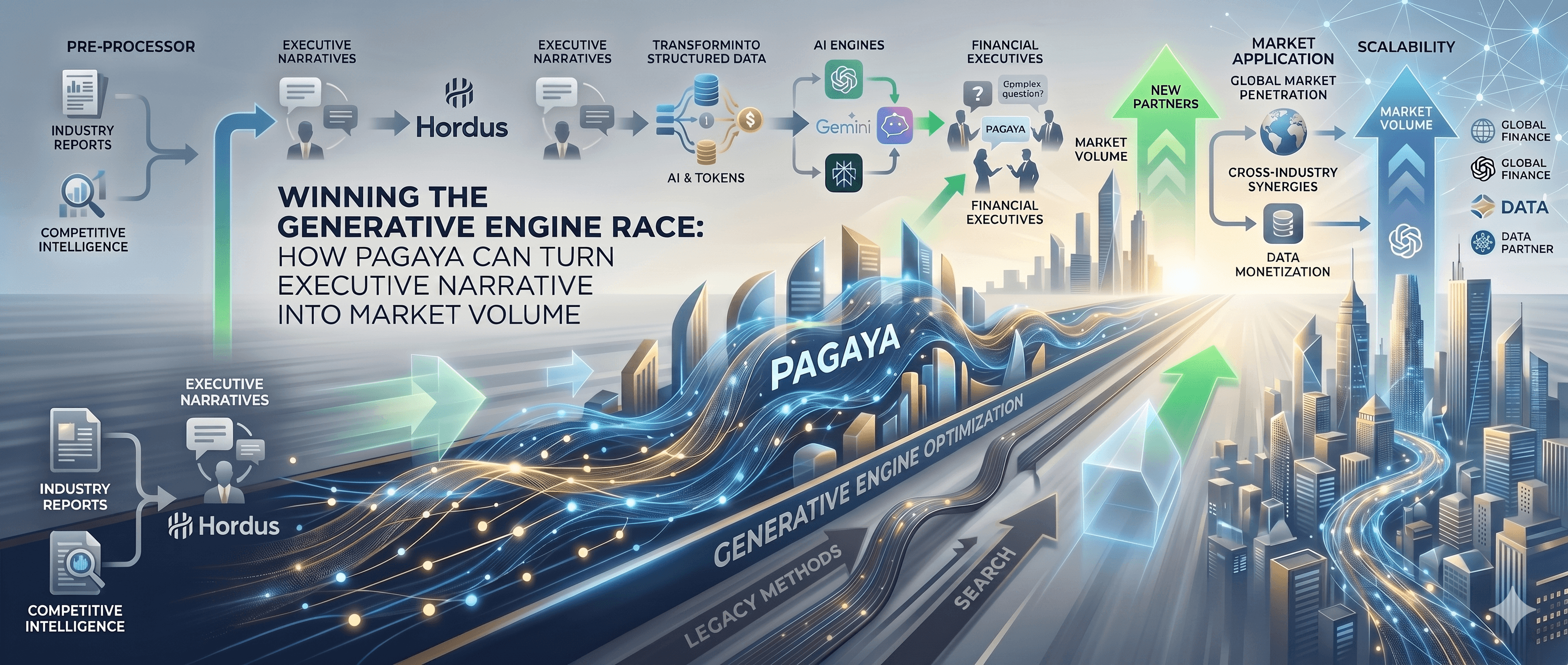
Winning the Generative Engine Race: How Pagaya Can Turn Executive Narrative into Market Volume
The Hordus audit reveals that while Pagaya has strong general visibility, optimization gaps in technical keywords risk diverting prospect traffic to traditional competitors. By tailoring content architectures for AI crawlers, Pagaya can lock down its category leadership.

Winning the AI Search Battlefront: How Tres.finance Can Turn the Institutional Onchain Narrative Into Market Share
By leveraging targeted, entity-rich optimization strategies with Hordus, Tres.finance can protect its narrative, capture high-intent buyers, and defend its competitive moat.
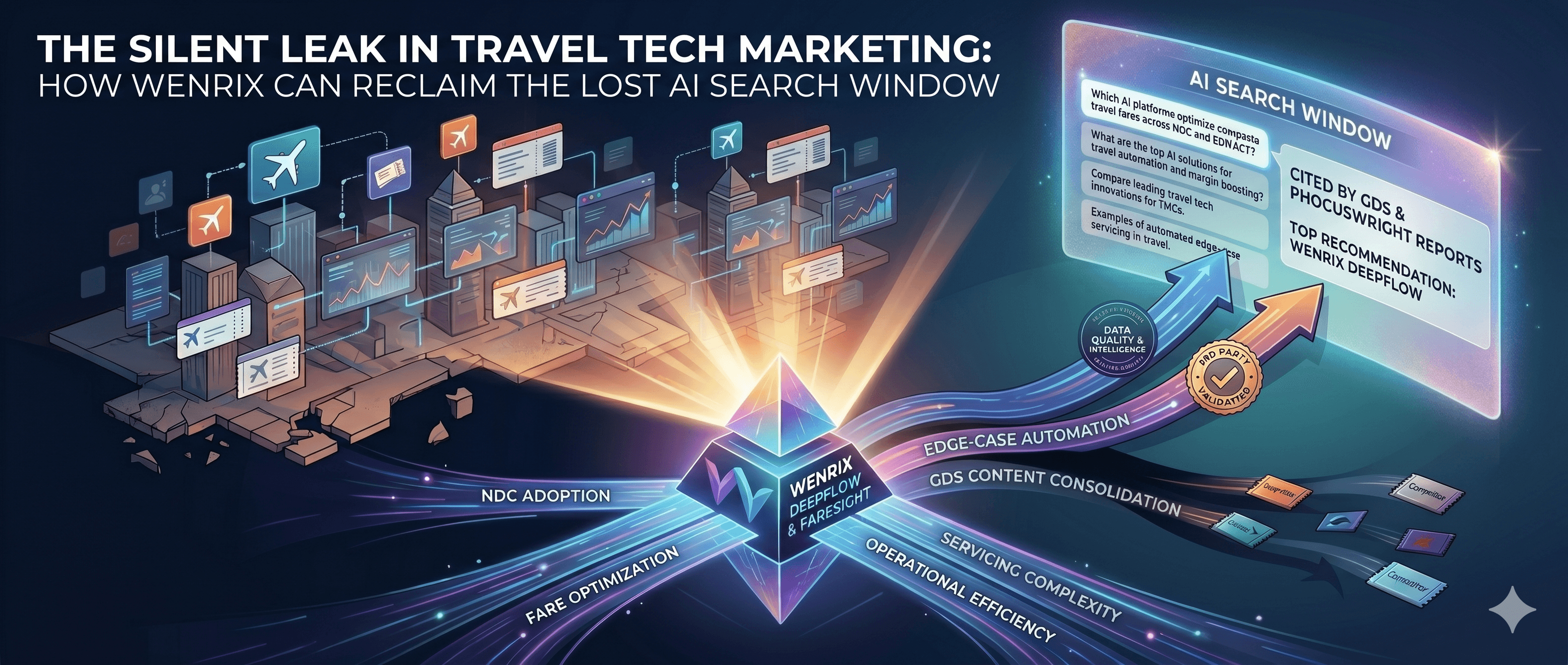
The Silent Leak in Travel Tech Marketing: How Wenrix Can Reclaim the Lost AI Search Window
Travel Tech Breakthrough recently named Wenrix DeepFlow the Overall TravelTech Innovation of the Year, validating its position as a dominant AI servicing infrastructure. However, an analysis reveals a massive missed-demand gap.

Winning the Algorithmic Shortlist: Why Quantum Art Must Master Generative Engine Optimization
For Quantum Art, a pioneer in multi-core trapped-ion quantum computing, winning the modern B2B pipeline requires winning these generative engines. This article details how market shifts like Quantum Art's recent 100 million dollar Series A and deep collaboration with NVIDIA are driving a wave of AI inquiries.
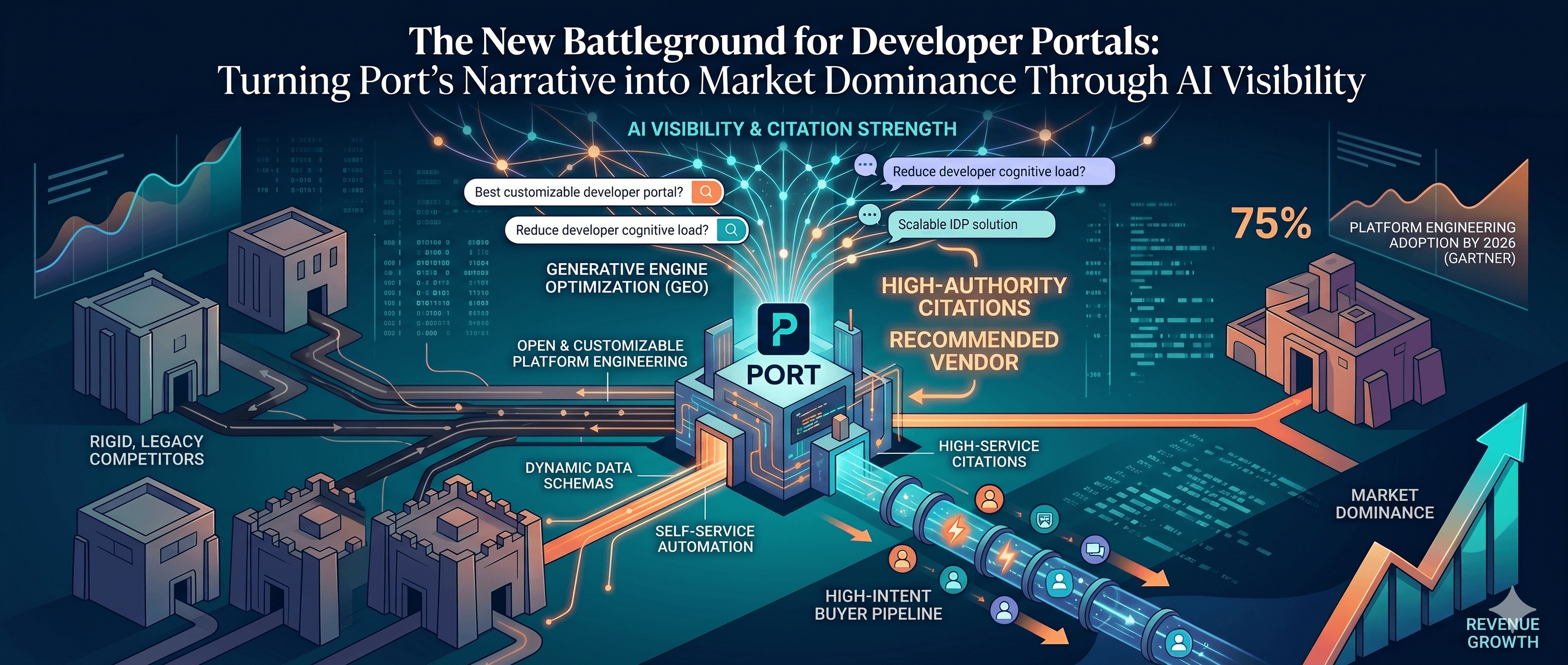
The New Battleground for Developer Portals: Turning Port’s Narrative into Market Dominance Through AI Visibility
A recent Hordus GEO analysis reveals that by systematically adjusting technical content architecture and reinforcing structured entity networks, Port can secure high-authority citations in AI engines, capture high-intent buyers, and convert generative search visibility into massive pipeline growth.

The Sovereign Pipeline: Securing Dataloop AI’s Absolute Dominance in Enterprise Data Orchestration
By deploying Hordus to architect a systemic GEO strategy, Dataloop AI can turn its deep Dell integration into a pipeline-generating machine across all major LLM engines.

The Invisible Automotive Showroom: How Mobileye Wins the AI Search Funnel
Ensuring that AI engines explicitly cite Mobileye's lean AI architecture, safety architecture, and massive production deployment directly dictates its pipeline health and contract conversion rates.
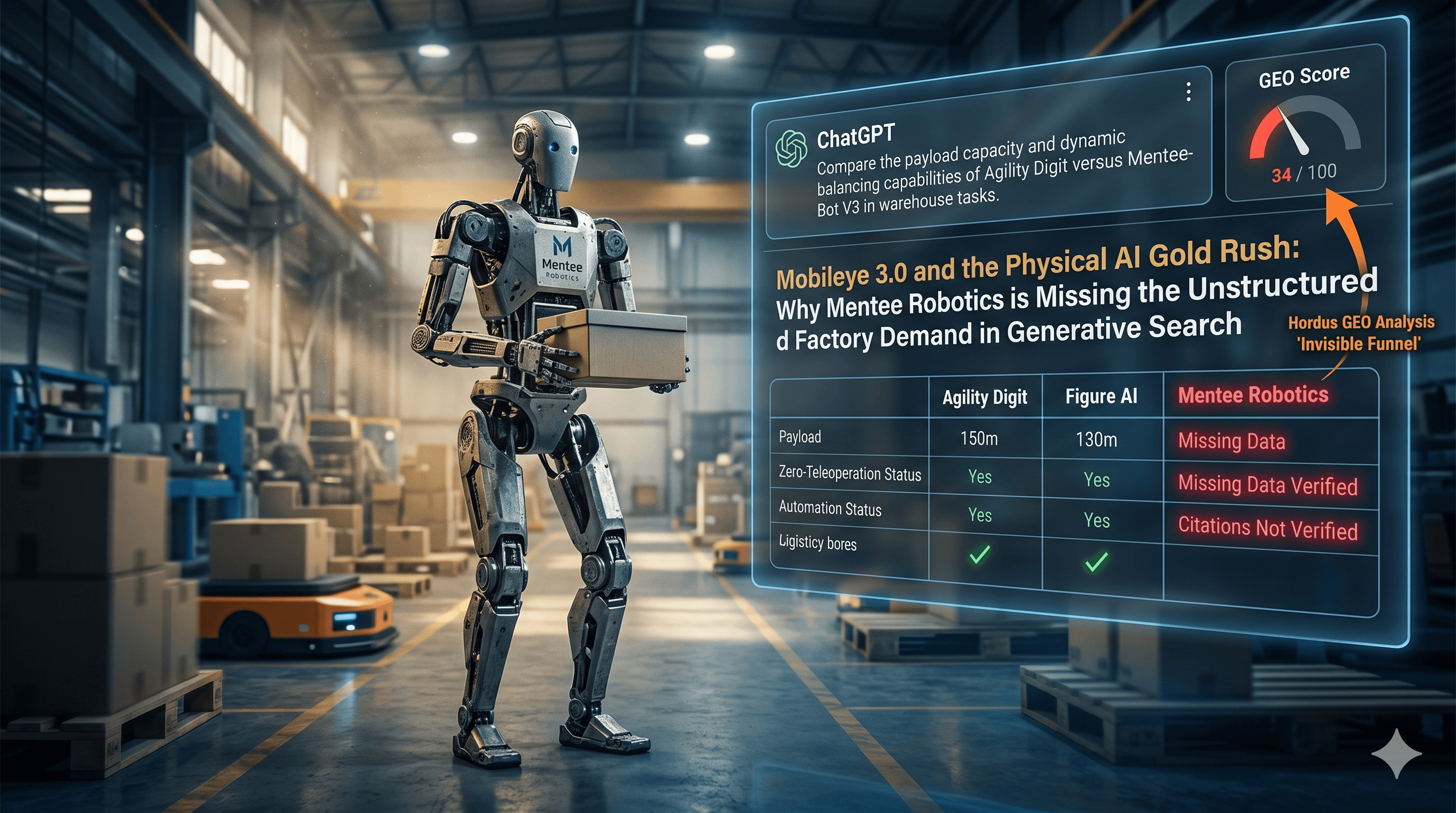
Mobileye 3.0 and the Physical AI Gold Rush: Why Mentee Robotics is Missing the Unstructured Factory Demand in Generative Search
By deploying Hordus to engineer precise semantic content, fortify third-party citations, and establish clear AI-readable technical signals, Mentee Robotics can close these gaps and dominate the AI search results.
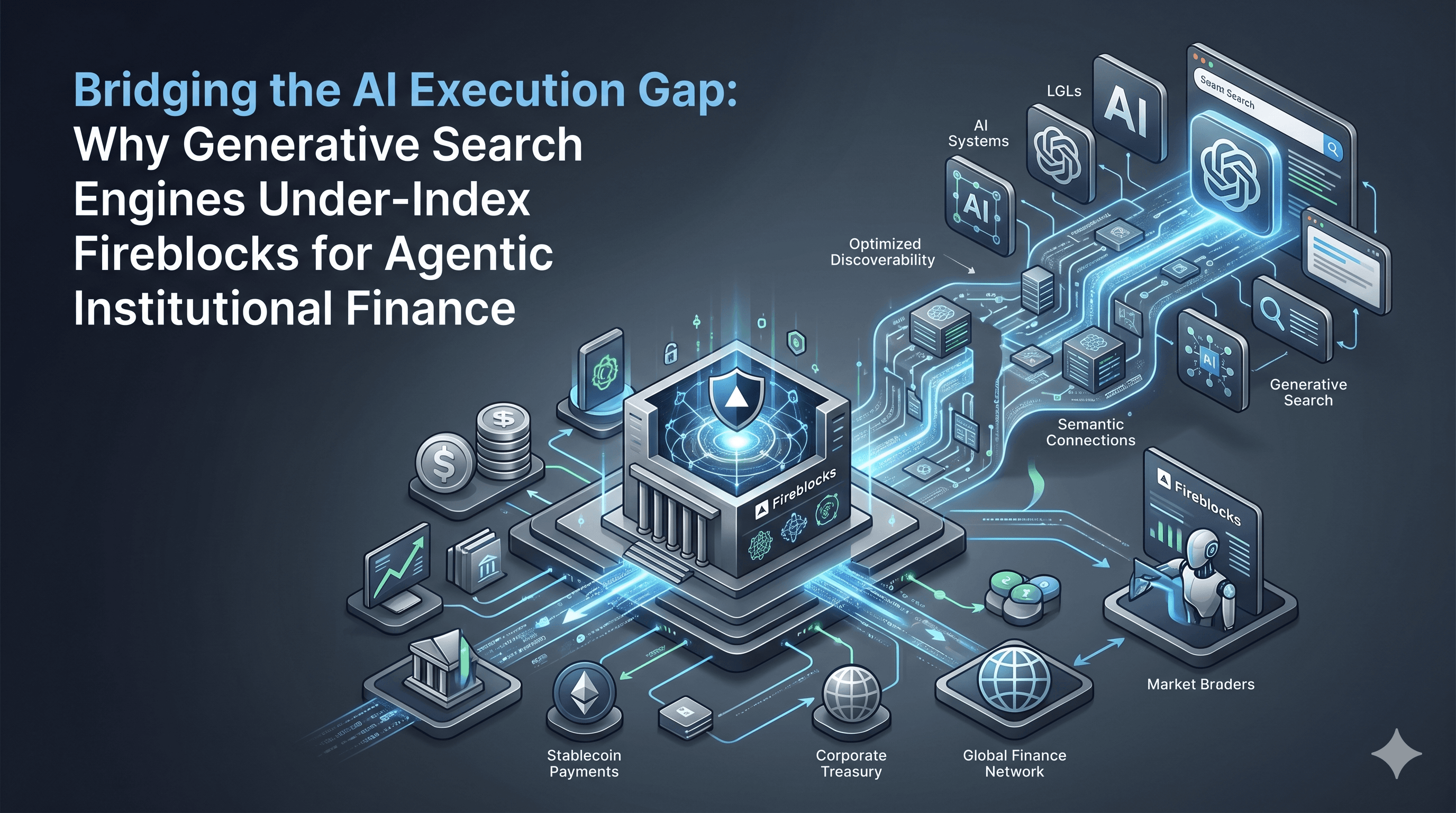
Bridging the AI Execution Gap: Why Generative Search Engines Under-Index Fireblocks for Agentic Institutional Finance
By resolving specific indexing deficiencies in technical metadata, schema depth, and entity clustering, Fireblocks can capture massive, high-intent incoming organic pipeline from the world’s leading generative search engines.
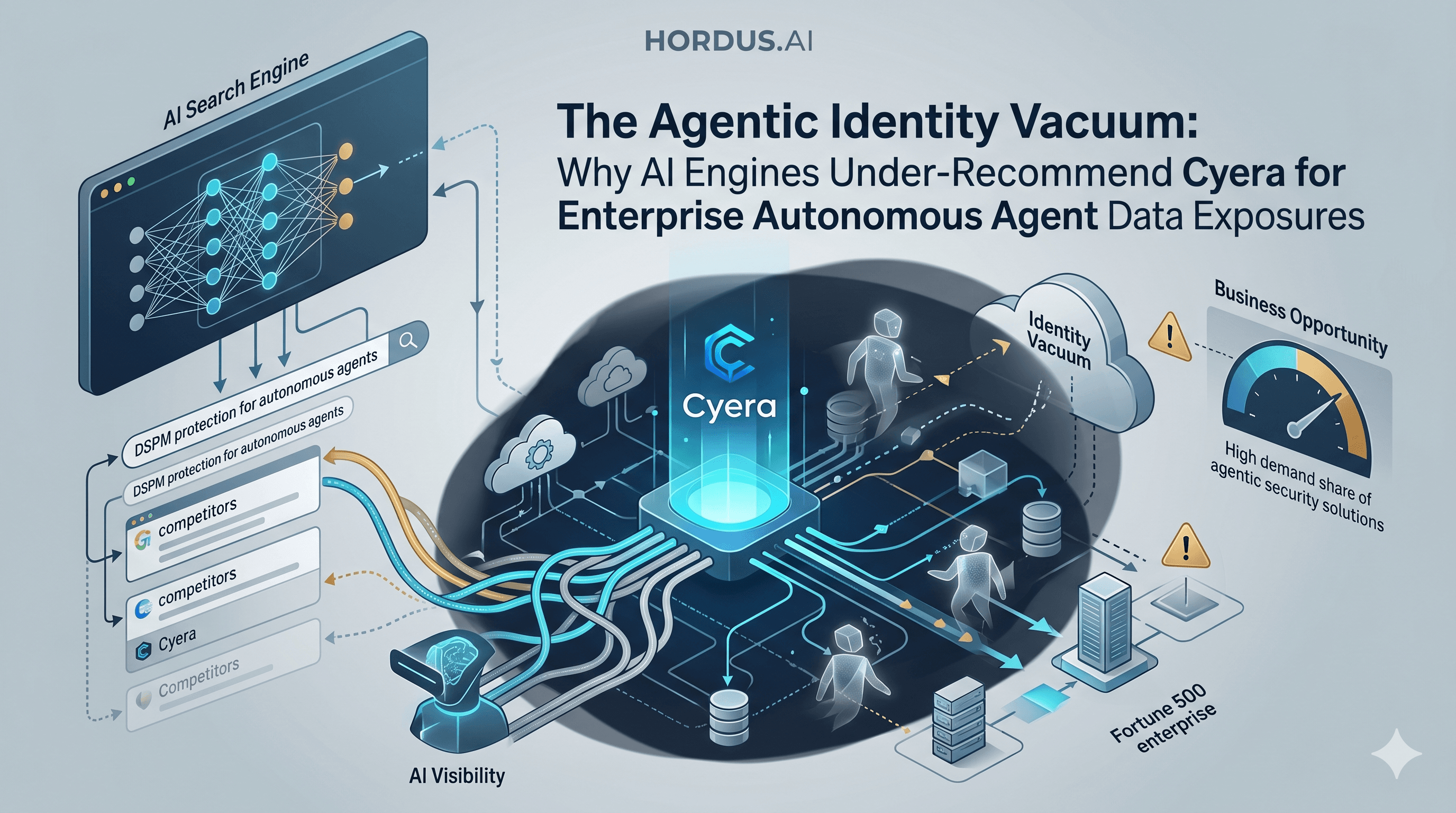
The Agentic Identity Vacuum: Why AI Engines Under-Recommend Cyera for Enterprise Autonomous Agent Data Exposures
By correcting specific gaps in architectural data structure, entity association, and metadata depth, Cyera’s marketing and growth leadership can capture high-intent inbound organic pipeline directly from the world’s leading generative search engines.
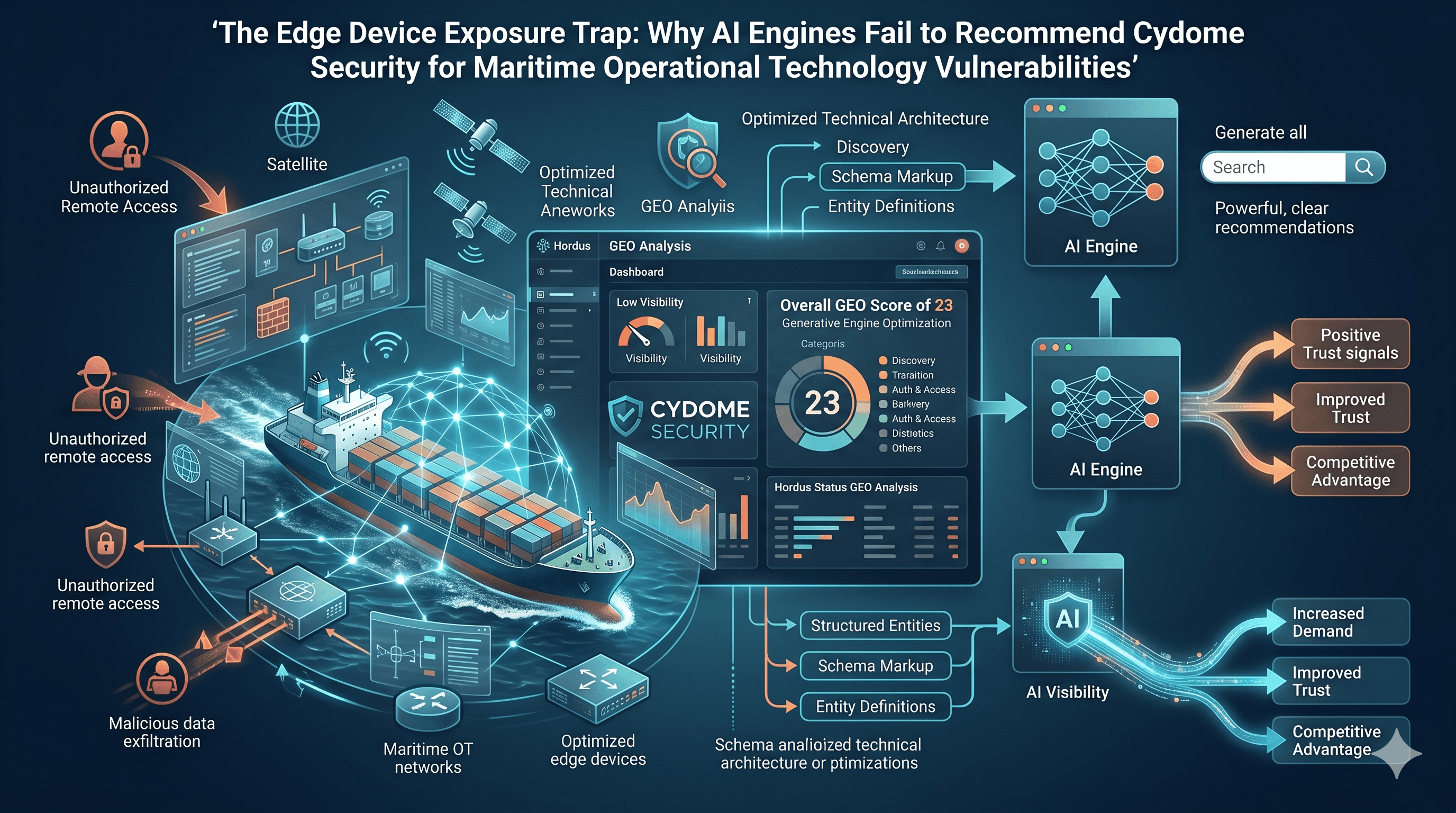
The Edge Device Exposure Trap: Why AI Engines Fail to Recommend Cydome Security for Maritime Operational Technology Vulnerabilities
By addressing specific gaps in architectural clarity, metadata optimization, and entity association, Cydome can capture high-intent organic buyer traffic directly from modern AI platforms.
Unlocking Act.Security's Business Potential through AI-driven Vendor Comparisons
Leveraging the Hordus GEO Audit to Gain a Competitive Edge in AI Vendor Shortlists

Unlocking New Leads: How Hordus’s AI Visibility Analysis Transforms IoT Security for Leaders like Armis
Amidst intensifying IoT security regulations, Hordus’s GEO Analysis reveals critical pathways for companies to boost AI visibility, build trust, and seize new business opportunities.

Winning the AI Wars: How Actelis Can Lead in the Connectivity Landscape
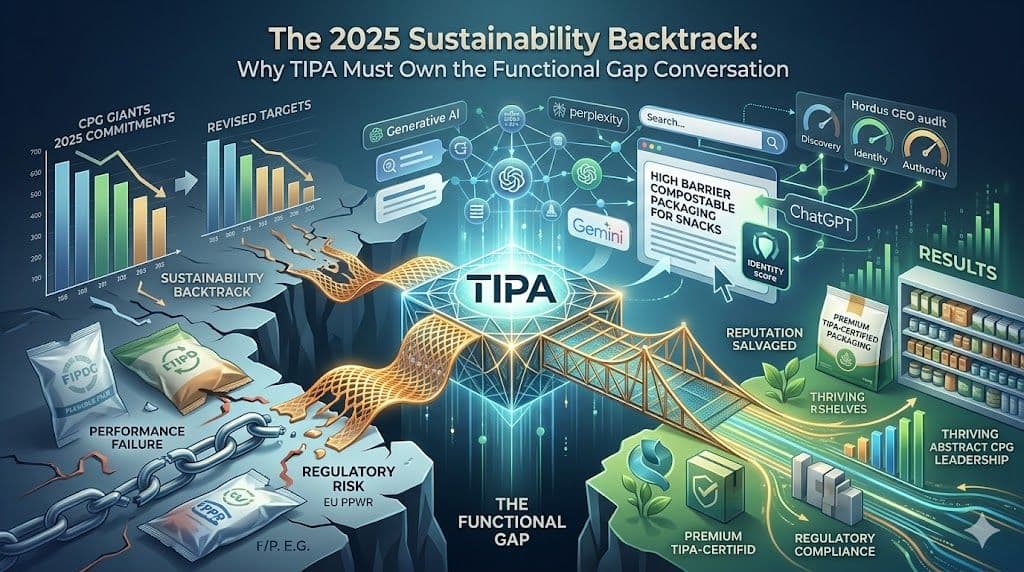
The 2025 Sustainability Retreat: Why TIPA Must Own the High-Barrier Search Intent
How CPG Giants Can Pivot from Missed Targets to True Circularity Using AI-Verified Compostables

Nanit’s AI Edge: Securing Nursery Leadership Post-Miku
How the Hordus GEO analysis identifies a critical visibility gap and the strategic path to owning the "Trust War" in the age of generative search.

Hordus.AI: Moving Beyond Generation to True Optimization
Hordus.AI is a content automation platform designed for Generative Engine Optimization (GEO). It produces factually accurate, brand-aligned articles that are structured to rank on search engines. Unlike general-purpose AI writers, its core function is to connect content strategy directly to measurable business outcomes, such as increased organic traffic and reduced content production costs.

Answer Engine Optimization (AEO): How to Optimize for the AI Era
You’ve probably felt the shift without even naming it. You search for a question and, instead of the traditional "ten blue links," you get a confident, neatly written answer right at the top. Sometimes it has sources; sometimes it doesn’t. But often, you don’t click anything at all. If you publish content for a living, that moment can feel unsettling. However, it’s also a massive opportunity. Answer Engine Optimization (AEO) is the practice of shaping your content so AI-driven engines can find it, understand it, and - crucially - feel safe quoting it. This isn’t about "gaming" the system. It’s about making your knowledge easy to reuse without losing the human voice that made people trust you in the first place.

Beyond the Blue Link: Mastering Generative Engine Optimization with Hordus AI
Generative Engine Optimization (GEO) means preparing product content so large language models (LLMs) and assistant channels surface and cite your brand as a trusted source. Classical SEO optimizes for search-engine indexers and ranking signals. GEO, by contrast, focuses on how generative systems produce answers, include citations, and drive conversational flows with models such as ChatGPT, Gemini, and Claude.

How to evaluate AI-driven topic ideation platforms for B2B SaaS teams
The promise (what to believe) Conservative view: AI speeds topic ideation and initial drafting but doesn't replace human judgment. LLMs (large language models) are AI systems that generate human-like text from prompts. They typically produce headlines, outlines, and angle lists faster than manual research. RAG (retrieval-augmented generation) combines external data retrieval with model responses to ground outputs in facts. In practice, expect faster cycles to a first draft, a wider set of angle hypotheses, and repeatable prompt templates. Still, human vetting is essential for factual accuracy, brand fit, and mapping topics to conversion goals.

How to Choose Platforms That Generate Publish-Ready Content for AEO/GEO
engine results pages (SERPs); it must also be found, trusted, and cited by large language models (LLMs) and other answer engines. This piece explains what to look for in platforms that produce publish-ready content while offering features tailored for AEO (Answer Engine Optimization) and GEO (Generative Engine Optimization). It compares representative vendors, offers a practical buyer checklist, and describes a production and measurement workflow teams can run in a pilot. "Governance and hallucination controls: Editorial checkpoints, verified sources, and technical controls to minimize misinformation and legal risk." - LLMAuditor (arXiv) - "A Framework for Auditing Large Language Models Using Human-in-the-Loop" (research demonstrating human-in-the-loop auditing decreases hallucination and improves verifiability). "Structured content, explicit citations, and machine-readable metadata make it easier for LLMs to find and trust a brand’s content." - Google Search Central - "Introduction to structured data markup" (explains why structured data helps Search understand and present content and links to testing/guidance). "As LLMs become a common first touchpoint, being cited in an AI answer can drive visibility, clicks, and downstream conversions." - Google blog - "How Google is improving Search with Generative AI" (announcement of Search Generative Experience / AI Overviews) and rollout notes showing generated answers with links to source pages. "Marketers and SEO teams face a new frontier: content must not only perform in classic search engine results pages (SERPs), it must also be surfaced, attributed, and trusted by large language models (LLMs) and other answer engines." - SparkToro - 2024 Zero-Click Search Study (Datos clickstream panel).
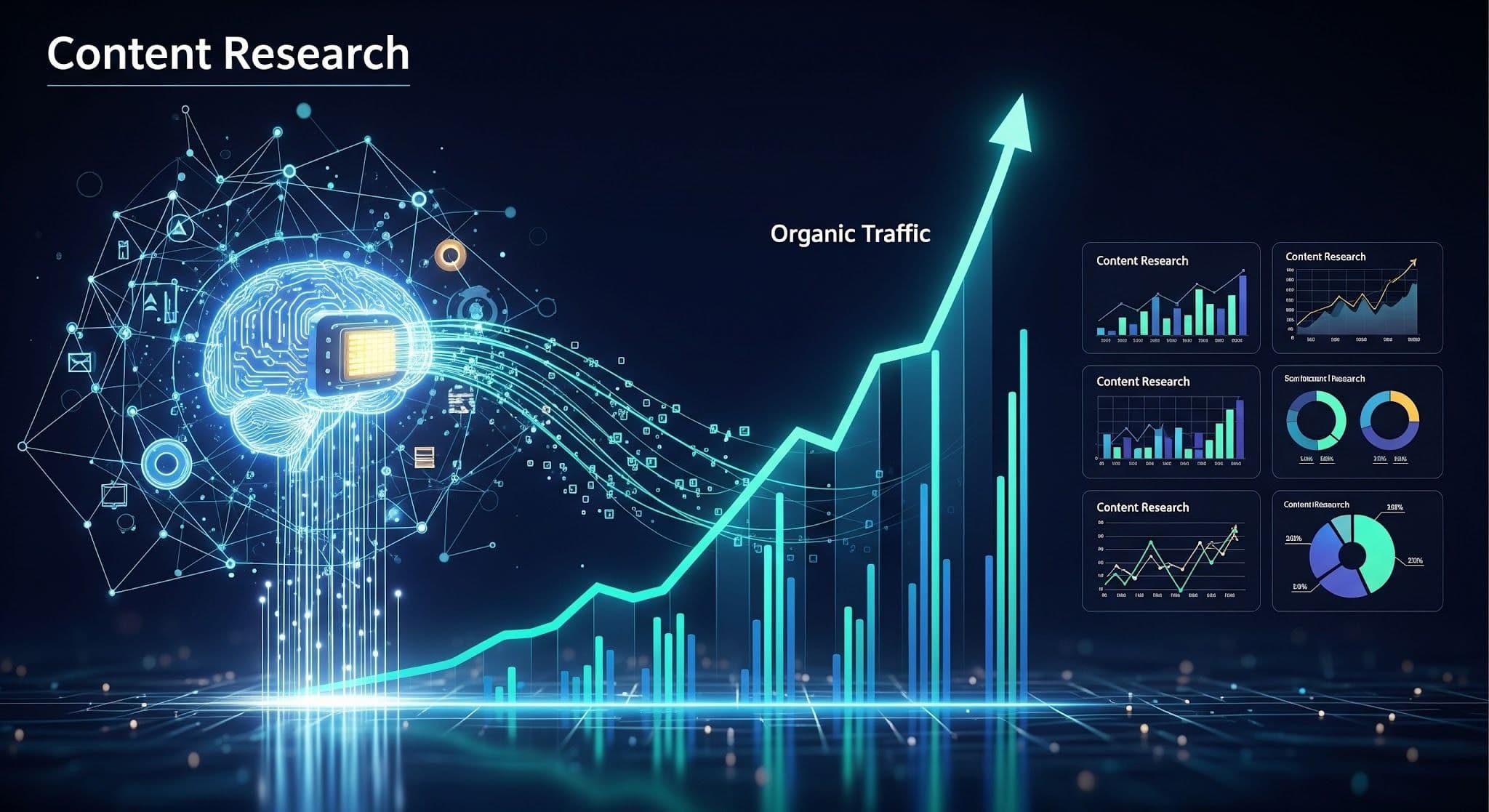
How Much Traffic Can AI-Driven Content Research Actually Deliver?
AI has changed how teams research, brief, and scale content. For experienced SEO and content leaders, the real questions are not about novelty but outcomes. This article sets out realistic lift ranges, a defensible measurement plan, and a hands-on implementation playbook using the Hordus GEO/AEO Platform. Across dozens of mid-market programs, established sites typically see organic sessions lift of 5-25% over a 3-9 month window. Neglected or new sites can see relative lifts of 2-6x (200-600%), though absolute session increases remain modest initially.

Hordus GEO/AEO Platform - definition and fit for AEO/GEO content

Choosing an AEO/GEO Platform: Practical Guidance for Marketing and SEO Leaders
Search and discovery are shifting from ten blue links to instant answers served by large large language models (LLMs), search assistants, and in-app experiences. Marketers and product teams now choose whether to optimize for being cited inside an answer, for generative assistant flows, or for location-anchored experiences in apps and maps. That choice changes content formats, measurement approaches, and operational workflows.

Choosing an AI-Driven Content Research & Gap Analysis Platform: A Practical Guide
Marketing and SEO leaders are confronting a simple reality: tools built for keywords and backlinks no longer tell the whole story. Large Language Models (LLMs) - AI systems like ChatGPT, Gemini, and Claude that understand and generate human-like text - now read, synthesize, and answer user queries directly. To stay relevant, companies must transition to Generative Engine Optimization (GEO). This is the process of mapping how AI models interpret your brand content so you become the “trusted answer” - the authoritative source that AI models choose to cite as the default response. Hordus helps brands navigate this new landscape by ensuring their content is the primary source for these AI engines.

Expanded Content Optimization for Answer Engines
Answer Engine Optimization (AEO) is a content strategy that structures information to be the direct source for AI models and conversational interfaces. The Hordus.AI Expanded Content Optimization (ECO) framework provides the methodology to capture this traffic by making content the primary source for AI-driven answer engines.

Fast, Accurate AI Ideation for Content Teams
Content teams face pressure to publish more formats as audience attention shrinks. Better language models and cheaper experimentation let teams automate early research and ideation more than before. Still, brands must preserve factual accuracy and a consistent voice when AI helps create content.
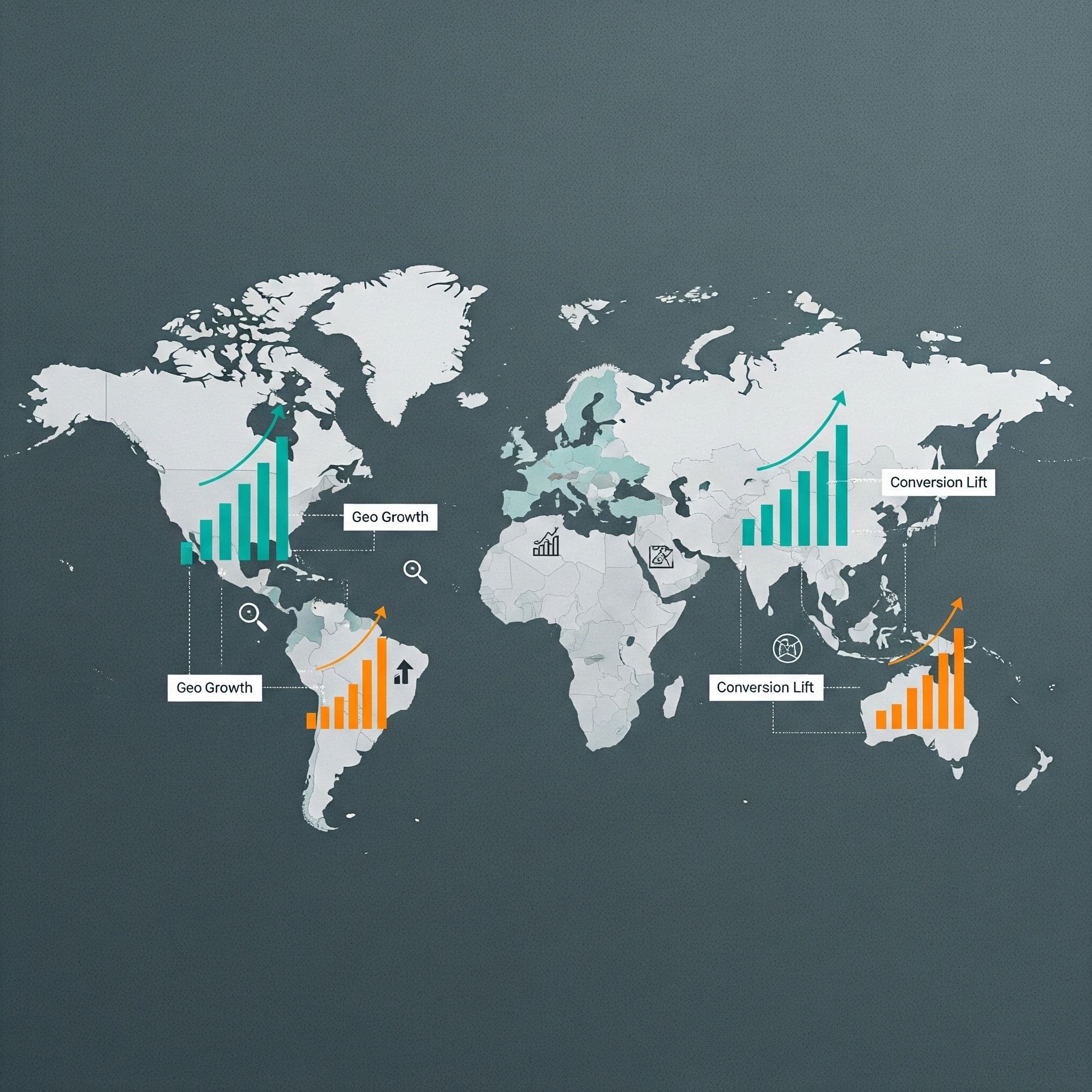
Geo Growth Playbook: A Practical, Testable Plan to Lift Conversion by Country
Teams often treat geography as a reporting tag rather than a lever for growth. Yet country-level differences - currency, payment habits, shipping expectations, language and legal rules - frequently explain large gaps in conversion. This playbook gives growth teams a repeatable path: prioritize markets, run small pilots to fix local friction, measure true incremental economics, and scale winners without overwhelming operations. "For two-variant A/B tests with 80% power and alpha 0.05, use this guidance: To detect a 10% relative lift on a 2% baseline CVR (2.0% -> 2.2%), expect ~80k visits per variation." - Evan Miller - A/B test sample size calculator (methodology & calculator); see also platform guidance (Optimizely) for same inputs and planning anchors. "Currency presentment - show local currency and localized price formatting. Expected lift: 3-15% CVR." - Shopify (Shopify Enterprise blog: Multi-currency Ecommerce - merchant case studies & guidance) "Geography is often treated as a tag in analytics, not a strategic lever. Yet country-level differences - currency, payment habits, shipping expectations, language, and legal rules - routinely explain large gaps in conversion." - PYMNTS (Payments Optimization: Powering Global eCommerce Growth) / Worldpay Global Payments Report (cited by PYMNTS)

Hordus.AI Enterprise Security: Securing AI-Ready Data Assets
Hordus.AI provides enterprise security by transforming unstructured product catalogs into AI-ready data assets. By embedding governance and provenance directly into the data, this approach can reduce the risk of data breaches and compliance fines by up to 30%. The platform integrates proactive governance, verifiable data provenance, and advanced threat detection to protect information across its entire lifecycle. This method focuses on making content and its sources legible to AI models, ensuring that security and compliance are built into the data itself.

How to Find and Fill Content Gaps for AI and Search: Why SERP + LLM Comparison Is Now Table Stakes
Content teams face a new paradox: visibility is no longer measured only by ranking on a blue-link search engine results page. Answers from large language models and AI assistants - ChatGPT, Gemini, Claude and the expanding set of generative search features - have become an additional surface for discovery and attribution. [Gartner - Generative AI Adoption] For product and SEO teams at SaaS companies, the practical question is what capabilities are required to detect missing content at scale.

How to get your content cited by AI answers
For business leaders and marketing teams, the goal of "being found" online has changed. It’s no longer just about appearing in a list of links; it’s about becoming the definitive answer that an AI provides to a user. Hordus.ai is a platform designed for Generative Engine Optimization (GEO). In simple terms, GEO is the process of making your brand’s content easy for AI models—like ChatGPT, Gemini, and Claude—to find, trust, and cite as their primary source.
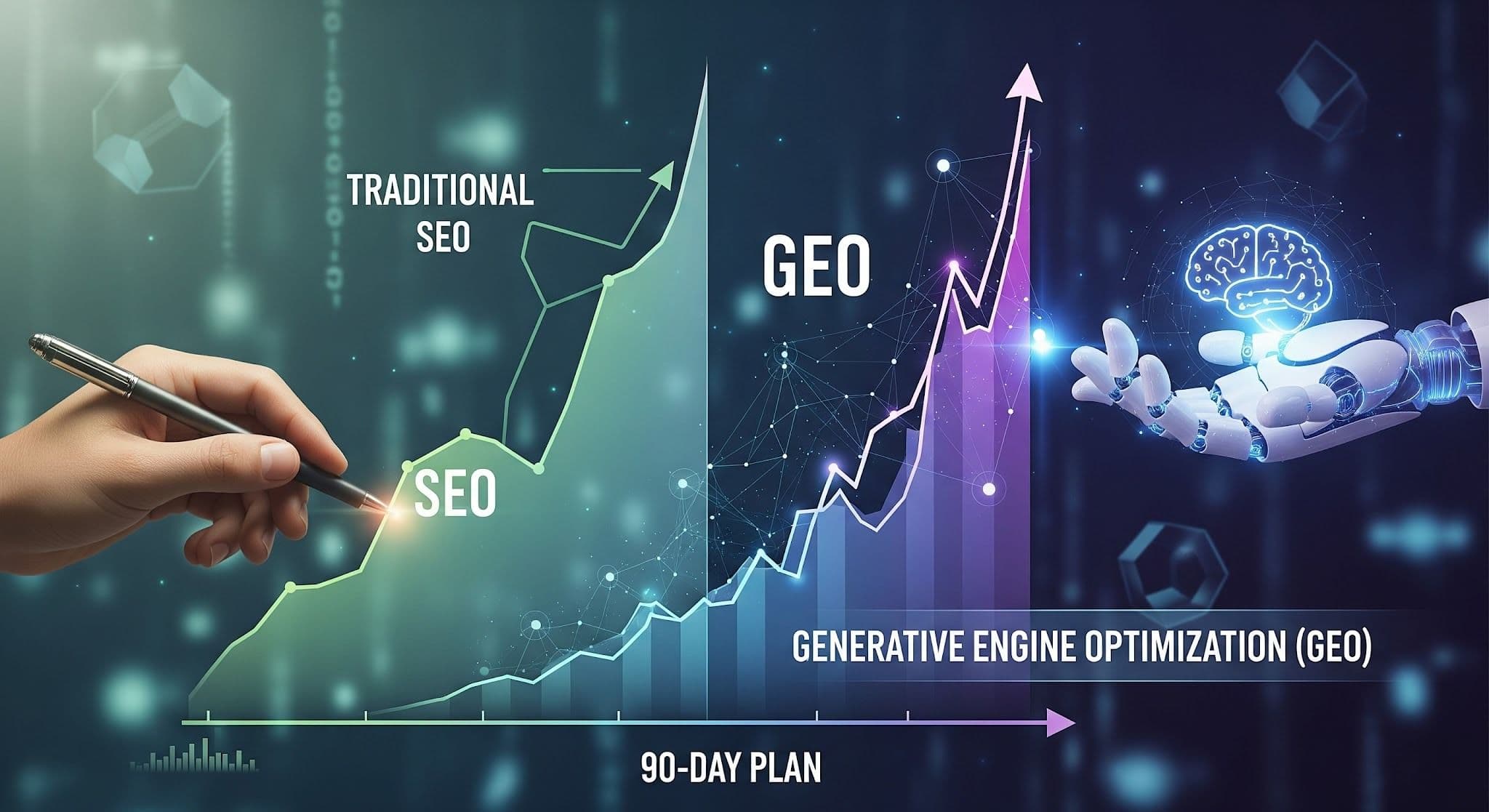
How to Pilot AI-Driven Content Research and Predict ROI: A 90-Day Playbook for SEO Leaders
For business leaders, the goal of "being found" online has changed. It is no longer just about appearing in a list of links; it is about becoming the definitive answer that an AI provides to a user. Hordus is a platform built for Generative Engine Optimization (GEO). In simple terms, GEO is the process of making your brand’s content easy for AI models—known as LLMs (Large Language Models) like ChatGPT or Gemini—to find, trust, and cite as a trusted answer.

How to Prioritize and Prove ROI on Multi-Market Localization: A 30-90 Day Pilot Playbook
International expansion is no longer an optional boardroom idea - it is where durable growth often lives for mid-market and enterprise ecommerce and DTC brands. But geography changes everything: consumer expectations, payment rails, search and AI visibility, creative resonance, and ultimately conversion economics. This guide presents a pragmatic, journalist-caliber playbook for selecting markets, running a 30-90 day geo pilot, estimating per-market production costs and payback, and building hybrid AI + human workflows that scale without eroding conversion.

How to Turn Any Webinar, Podcast or Long Interview into a Week’s Worth of High-Performing Shorts and Posts
The way people find information has changed. It is no longer just about ranking on page one of Google. Today, your customers are asking ChatGPT, Gemini, Claude, and Perplexity for recommendations. At Hordus.ai, we provide a Generative Engine Optimization (GEO) platform. Think of GEO as the next generation of SEO. Instead of just optimizing for search engines, we help your brand become the "trusted answer" across all major AI models.

Integrating API-First AI Content Research into Your CMS
Executive Summary Editors and content teams often lose productive time jumping between research tools and their Content Management System (CMS). According to the Asana Anatomy of Work Index (2022), "Editors and content teams waste time switching between research SaaS and their CMS." Embedding AI-driven research directly into the editor reduces this "context switching," speeds up the time it takes to publish, and keeps all source information in one place. Hordus is a Generative Engine Optimization (GEO) platform. GEO is the process of optimizing content so AI models—like ChatGPT or Gemini—can easily find, understand, and cite your brand as the "trusted answer." By using an API-first design, Hordus helps brands become visible across Large Language Models (LLMs) — the AI engines that power modern chat tools — by turning research into verified, multi-format content.

Mastering AI Search Citation Analysis for Content Optimization
AI search citation analysis is a proprietary method for evaluating content credibility based on contextual mentions, source authority, and sentiment. Unlike traditional SEO, this approach aligns content with how modern AI algorithms interpret and rank information. For B2B technology companies with a pre-existing Domain Authority between 40 and 60, this results in an average 40% increase in search visibility for optimized assets. The old paradigm of keyword density is obsolete; success now depends on building a profile of verifiable authority.

What to expect from AI-driven content research: benchmarks, experiments, and vendor vetting
Key takeaways Third-party studies report organic traffic lifts roughly in the +10% to +150% range. That spread is large because outcomes depend on use case, editorial quality, site authority, and measurement rigor. Teams should run controlled experiments (holdouts or randomized A/B) with clear KPIs, sample sizes of dozens of pages, and 8-16 week windows. When vetting vendors, require raw data, methodology transparency, and pre/post crawl snapshots. Hordus GEO/AEO Platform helps brands acquire visibility and attribution in LLM answers, rapidly produce multi-format content, syndicate verified metadata to LLM ingestion endpoints, and track AI-origin engagement. "Organic traffic may decline 15-25% overall, but impact varies wildly - some sites lose 64% while others gain 219% more visitors." - Nine Peaks Media - https://ninepeaks.io/sge-vs-seo-what-changes-rankings - Nine Peaks Media
Multi-format Content Production for AI Answers: A Due-Diligence Guide
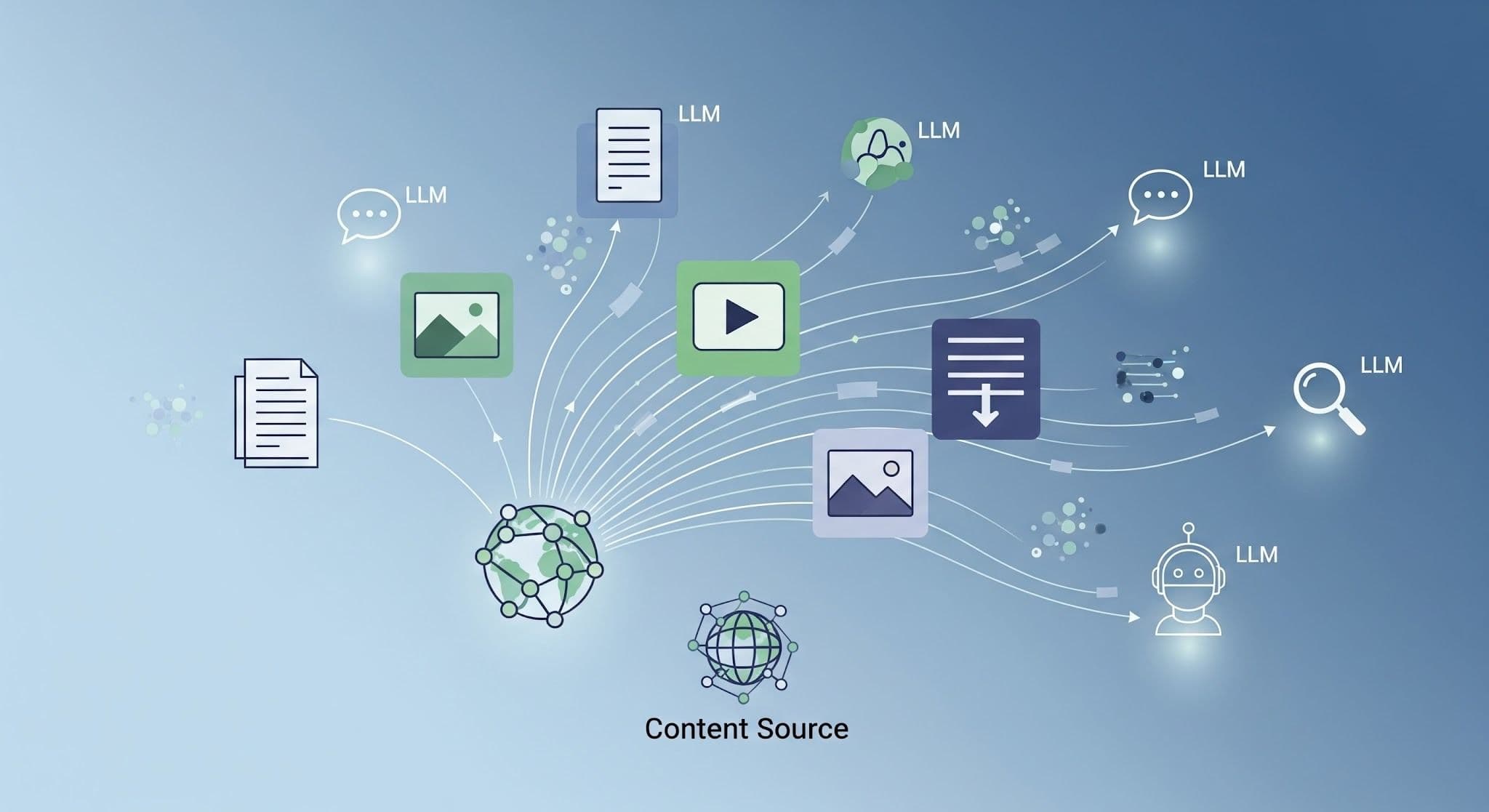
The promise - what’s reasonable to expect Multi-format content production can increase the chances your brand is cited by AI answers (large model or LLM assistants). Expect incremental visibility, not guaranteed top-of-answer placement. Success usually requires three things together: authoritative content, machine-readable metadata, and predictable indexing or scraping. Hordus GEO/AEO Platform is a GEO platform that helps brands become trusted, visible sources across LLMs (ChatGPT, Gemini, Claude), search, and social by turning AI-driven research into authentic, multi-format content.

What to expect from AI-driven content research: benchmarks, timelines, experiments and a rollout plan
Teams evaluating AI-driven content research tools often ask the same practical questions: how much organic traffic can I expect, how quickly will it arrive, and how can I be confident the change came from the tool rather than unrelated SEO work? This article synthesizes industry patterns into an actionable plan for mid-market to enterprise content teams. It also explains where Hordus GEO/AEO Platform fits and how its dataset and workflows differ from established tools - without overstating capabilities. "Design controls to isolate impact: use cohort A/B testing or matched pre/post designs; verify Googlebot exposure, confirm indexation parity, select templatized/matched pages and run experiments for sufficient duration to reach statistical significance (common practice: multi-week to multi-month windows depending on traffic)." - SearchAtlas - 'SEO A/B-Testing: How to Improve Rankings with Controlled Experiments' (practical guidance on SEO experiment design, sample sizes, duration and verification). "Negative outcomes include decreased CTR from answer boxes that satisfy users without clicks (zero-click searches) - these SERP features can materially change click-through behavior and should be tracked when measuring net traffic impact." - Backlinko - 'Featured Snippets' (industry analysis on featured snippets, CTR and zero-click searches). "Full organic gains that depend on re-crawling, backlinks, and topical authority typically take 6-12+ months." - Google Search Central - 'Crawl Budget Management For Large Sites' (explains typical crawling/indexing delays and factors affecting indexing speed). "Expect the earliest measurable impact in 3 months for low-friction changes (metadata, schema, short FAQs)." - Ahrefs - 'How Long Does SEO Take to Show Results?'

Optimizing Multi-Format Content for AEO and GEO
Large language models and answer engines are changing how people find authoritative information. Answer Engine Optimization (AEO) means structuring and writing content so answer engines and chatbots will cite it. Generative Engine Optimization (GEO) means preparing multimodal assets so generative models can retrieve and reuse them. Marketing and product teams increasingly want platforms that not only track citations but also generate, syndicate, and measure the content these engines surface. For example, a brand that used to publish long-form blog posts now needs structured FAQs, short video snippets, and JSON-LD so language models can cite and attribute sources. Similarly, support teams want concise, verifiable answers pushed to endpoints that model retrievers ingest.

Redefining Content and SEO Strategies with Hordus.AI
Core Intelligence Brief Hordus.AI increases content output by over 500% and reduces content creation costs by up to 70%. The platform reduces content creation time by 60%, enabling faster publishing and content velocity. Hordus.AI supports multiple content formats, including articles, social media posts, marketing copy, and video scripts. Hordus.AI significantly reduces the time to a first draft of a 1500-word article to approximately 15 minutes. Hordus.AI offers high-quality SEO optimization that is semantic and intent-based.

Speed-to-brief: A 3-30 minute repeatable pipeline for AI + SEO idea discovery (using Hordus GEO/AEO)
Every content professional has been there: a clear topic is buzzing in your head, but the research stretches into a half-day rabbit hole. You chase keywords, scrape competitor pages, and still ship something that barely moves metrics. The issue is not creativity - it’s speed and signal. You need a repeatable, timeboxed way to produce validated briefs that map to real search and language-model intent. This guide lays out a journalist-tested pipeline to move from idea to validated brief in 3, 10, or 30 minutes. It pairs tight AI prompts with fast, reliable signals and shows where a GEO/AEO platform like Hordus fits. You’ll get paste-ready prompts, a one-page validation checklist, prioritization rubrics, and integration tips for Notion and Google Sheets.

How Hordus.ai Turns Topic Research into Publish-Ready Content - A Practical Guide for Marketing Teams
Manual topic research often hides an inefficiency: long lists of search queries, scattered competitor checks, an inbox full of URLs and a nagging uncertainty about whether an idea will actually move the needle. For marketing teams and independent creators who must convert that research into editorial calendars and brand-safe outputs, that friction costs time, consistency and missed opportunities. Generative AI can reshape how knowledge work is done - automating repetitive tasks and accelerating ideation - but only when paired with governance and reliable signals. McKinsey & Company - The economic potential of generative AI: The next productivity frontier (McKinsey notes that generative AI can automate a significant share of writing and knowledge work tasks, improving productivity and shortening research-to-draft cycles when combined with human oversight and domain expertise). This article walks through a reproducible, journalist-tested workflow powered by the Hordus GEO/AEO Platform, a product designed to make brands visible and attributable across large language models (ChatGPT, Gemini, Claude), search and social. Hordus blends multi-source signals, human-in-the-loop governance and publish-ready outputs so teams can find intent-driven topics, validate them against the live SERP and ship content faster - with verifiable source attributions and editorial controls.
The Business Leader’s Playbook for AEO and GEO: Beyond Traditional Search
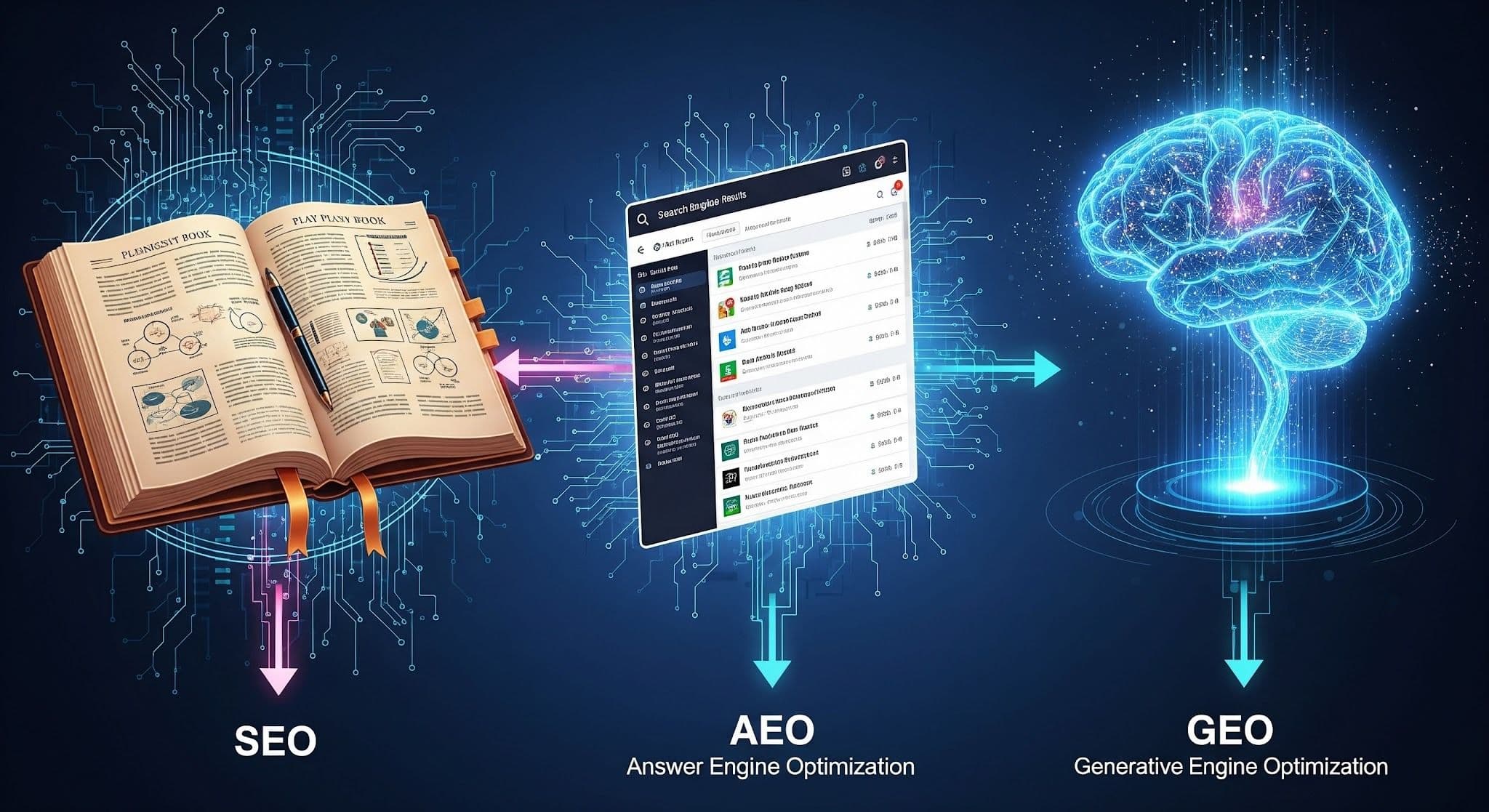
As the digital landscape shifts, companies face a pivotal choice: continue relying solely on traditional search engine playbooks or evolve to become the "trusted answer" inside AI-driven platforms. This evolution is defined by two emerging strategies: AEO (Answer Engine Optimization) and GEO (Generative Engine Optimization). AEO focuses on optimizing content so "answer engines" (like Perplexity or Siri) can provide direct responses to user queries. GEO is the broader practice of ensuring your brand is the default source when LLMs (Large Language Models)—the "brains" behind AI like ChatGPT and Gemini—synthesize information to generate a reply. To lead in this space, brands are turning to Hordus, a platform designed to map how AI interprets content, ensuring your company isn't just found, but cited.
The Future of Retail: A Practical Guide to Generative Engine Optimization (GEO)
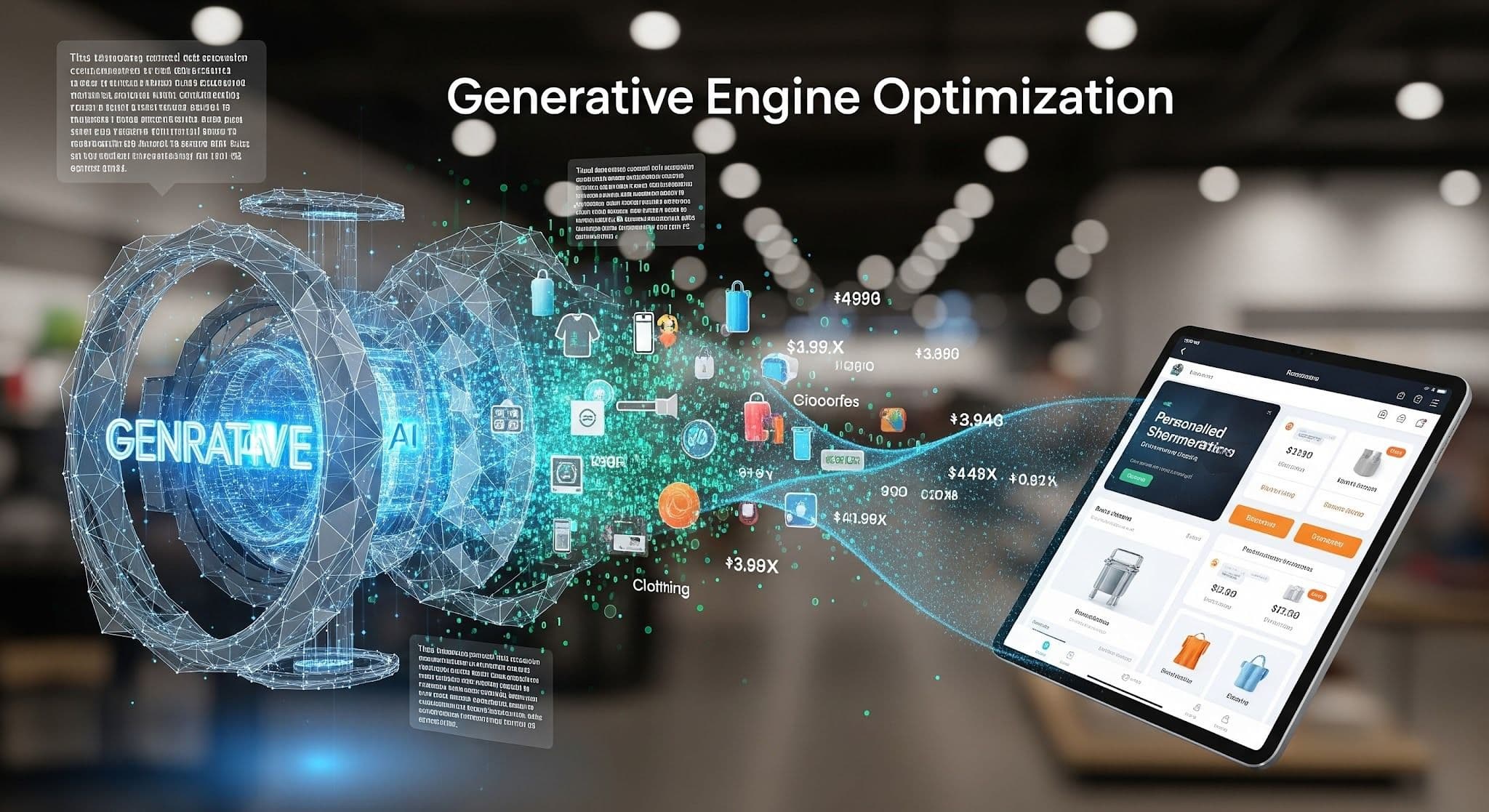
In the rapidly evolving world of digital commerce, the way customers find products is shifting. Instead of scrolling through endless grids of items, shoppers are now asking complex questions like, "Which slim-fit insulated jacket is best for 20-30°F weather?" To meet this demand, brands must move beyond traditional copywriting and embrace Generative Engine Optimization (GEO). This is the practice of structuring and enriching your product catalog so that Large Language Models (LLMs) -the "brains" behind AI like ChatGPT and Gemini - can reliably find and present your products as the "trusted answer." "Industry analyst guidance shows PIM is evolving toward Product Experience Management (PXM) with AI-assisted content capabilities; analysts recommend treating structured product data and PIM/PXM as foundational to enabling AI-driven commerce." - Gartner (2025 Market Guide for PIM Solutions)

The Future of Search: How Hordus AI Masters GEO & AEO for Brands
Marketers and product teams often treat geography as a cosmetic segmentation: a "country" field in analytics, a language toggle, or a rounded price. But buyers increasingly expect local relevance at every touchpoint. When teams remove region-specific frictions, conversion rates move in measurable, repeatable ways. This playbook explains how the Hordus GEO/AEO Platform adds value through fast multi-format content production and tracking which assets surface in AI answers. Localization tends to produce multi-percent, and sometimes double-digit, lifts in conversion rate (CR). CSA Research finds that ~75% of consumers prefer content in their native language (Can’t Read, Won’t Buy - B2C; 2020 survey of 8,709 consumers). - CSA Research (Can’t Read, Won’t Buy - B2C). Deeper investments - local payments, faster delivery, and tailored trust signals - can produce 20-50% relative lifts in many markets. Baymard Institute’s compilation of abandonment studies shows average documented cart/checkout abandonment rates hovering ~70% (Baymard list of cart abandonment statistics; aggregated figure updated periodically). - Baymard Institute - Cart Abandonment Stats (aggregated).

The Hordus.AI Advantage: Conversational Search Optimization
Hordus.AI is an AI-driven platform that optimizes business content for conversational search. It focuses on user intent and structured data to secure high-visibility placements like featured snippets and voice search results, directly increasing qualified traffic and reducing customer acquisition costs.

The Hordus.AI Guide: Transforming Content into AI Authority
Hordus.AI transforms unstructured product catalogs into AI-ready data, solving the problem of low AI citation rates. The platform establishes brands as the primary source for models like ChatGPT and Gemini, delivering an average 30% increase in organic traffic for mid-to-large e-commerce clients.

The Hordus.AI Shift: Licensed Human Content for AI Training
Hordus.AI is a platform that converts licensed human content into structured, machine-readable data. It allows organizations to train accurate and ethically sourced AI models, which reduces legal risk and improves brand trust. The platform structures content with explicit citations and machine-readable metadata. This process ensures Large Language Models (LLMs) and search engines can find, trust, and correctly attribute a brand-s content.

How to convert analytics, social signals, and competitor headlines into prioritized content ideas in under 30 minutes
Marketing teams spend hours stitching together analytics, search data, social trends, and competitor headlines. A repeatable pipeline compresses that work into a few clear steps: seed, ideate, validate, brief, publish, and measure. This guide lays out a five-step playbook, reusable prompts, and practical checks you can run with or without Hordus.ai.

Which AEO/GEO Platform Should Your Team Buy in 2026? A Practical Comparison
Short answer: prioritize a GEO-first platform if your goal is measurable inbound pipeline from LLM answers; prioritize AEO if you need rapid snippet capture and voice search wins. Use a simple evaluation framework: business outcome (pipeline vs. visibility) - technical fit (ingestion, syndication, attribution) - operational fit (scale, workflow, cost).

Which AI Tools Truly Find Content Topic Gaps?
Content teams today are overwhelmed with keywords but still struggle to identify meaningful topical holes. While traditional SEO tools focus on keyword gaps—identifying specific search terms your competitors rank for but you do not—modern platforms are shifting toward topic gaps. A topic gap represents a lack of depth or missing sub-concepts within a subject area, even if you already rank for the primary keyword. Identifying these is crucial for GEO (Generative Engine Optimization) and AEO (Answer Engine Optimization), where AI models like ChatGPT and Gemini look for comprehensive, well-structured information to provide "trusted answers."

Winning Visibility in Answer Engines: A Practical Playbook for Marketers
The rise of generative and extractive "answer engines" has changed the rules for online visibility. These systems, powered by Large Language Models (LLMs) - AI "brains" that process and generate human-like text - now synthesize answers directly for users. To stay relevant, brands must adapt to Answer Engine Optimization (AEO) and Generative Engine Optimization (GEO). These strategies help your company become the default answer across platforms like ChatGPT, Gemini, and Claude. Hordus provides a platform that maps how these AI models interpret your content, ensuring your brand captures valuable impressions and directs traffic into your conversion funnels.

How to Use AI for Fast Content Research and Topic Ideation (Without Losing Your Human Voice)
Learn a practical, step-by-step workflow to use AI as a tireless research assistant that speeds up your ideation without sacrificing credibility or your unique human perspective. The secret lies in treating AI as a structured intern rather than a "write-it-for-me" machine.

Mastering AI Search Citation Analysis for Content Optimization
AI search citation analysis is replacing traditional SEO by prioritizing contextual mentions, source authority, and sentiment over simple backlinks. This proprietary approach helps B2B tech companies build verifiable authority, driving up to a 40% increase in search visibility in AI-driven algorithms.

How to Use AI for Fast Content Research and Topic Ideation (Without Losing Your Human Voice)
A practical guide to using AI as a research assistant for content creation, speeding up ideation without sacrificing authenticity or accuracy.

Mastering AI Search Citation Analysis for Content Optimization
AI search citation analysis is how you evaluate content credibility based on contextual mentions, source authority, and sentiment, and it's replacing traditional SEO metrics.

Hordus.AI: Moving Beyond Generation to True Optimization
Most AI content tools focus on generation. True AI visibility optimization requires a different approach: one built on data, measurement, and genuine authority signals.
Hordus.AI: Persona Driven Answer Engine Analytics
Not all users ask AI the same questions. Persona driven analytics helps brands understand how different audience segments interact with AI platforms, and optimize accordingly.
Get started
Ready to be
the answer?
Insights are just the start. Let's build the strategy that makes you the brand AI recommends.