Ranking Yourself #1 Is Helping Your Competitors in AI Overviews
Google's AI Overviews cite self-ranked best-of listicles but recommend their authors only 31% of the time. Here's why the tactic now helps competitors, and what to publish instead.
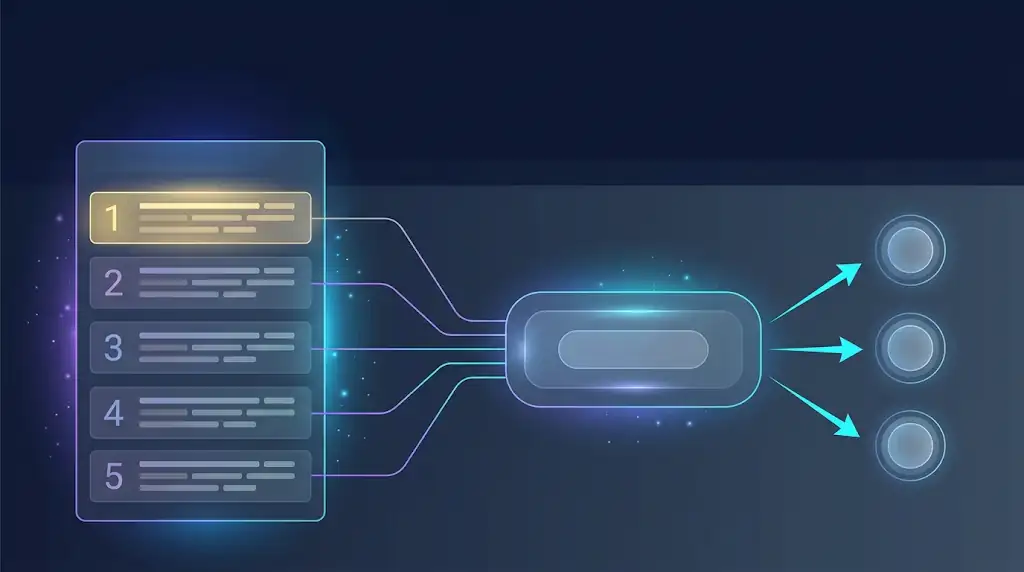
Short answer: the "best [category] tools" listicle that ranks its own author first has stopped working in Google's AI answers, and may now help competitors. In a study of 100 B2B software queries between April and June 2026, Google's AI Overviews cited brands' own self-promotional listicles 323 times but recommended those brands only 31% of the time, often recommending the competitors listed in the same article instead. Brands that relied heavily on the tactic also saw organic declines through 2026. The better path is honest comparison content and recommendations earned from independent sources.
The tactic that defined B2B content in 2024-2025
The formula was simple: publish "The 10 Best [Category] Tools" on your own blog, put yourself at number one and describe competitors briefly below. For a while it worked, in search and in early AI answers, because few independent pages covered niche B2B categories. SEO consultant Lily Ray tracked 184 such pages from 146 brands, many of which had published more than one, and found that the tactic spread rapidly across B2B in 2025 (Lily Ray).
What the study found
Ray analyzed AI Overviews for 100 B2B "best [category]" queries at three checkpoints: April 15, May 15 and June 8, 2026. Google cited brands' own listicles 323 times across 80 of the queries. In 224 of those cases, 69%, the brand that wrote the listicle was not among the brands the answer recommended. In 74 of the 100 tracked queries, AI Overviews cited a listicle from a self-promoting brand without recommending that brand (Search Engine Land).
The examples are stark. For "best LMS for selling courses," Google cited Oasis LMS's own listicle throughout its answer, then recommended Kajabi, Thinkific, LearnWorlds and Teachable instead. TMetric's task management listicle was cited while Todoist, Asana, Trello and ClickUp were recommended. Lily Ray summed it up this way: "Google appears to have decoupled what it cites from who it recommends."
Why it backfires
A self-ranked listicle does two things at once: it supplies useful information about a category, and it makes a claim that the author is the best option. AI Overviews appear to accept the first and discount the second. The page becomes a convenient source of competitor names and features, while the recommendation itself draws on sources without an obvious stake, such as Reddit, Forbes and YouTube, which were among the most frequently cited domains for best-of queries in the study.
The damage was not limited to AI answers. Ray found that many domains that leaned heavily on the tactic saw organic visibility drop sharply around January 20, 2026, with some declines accelerating through Google's May 2026 core update. She notes that self-promotional listicles were one of several possible causes, alongside issues such as scaled AI-generated content. In Ray's words: "For many brands, ranking yourself #1 could be a vote for your rivals."
What to do instead
1. Audit your existing listicles
Find every "best X" page on your site where you rank yourself first. Check whether they still earn traffic, links or conversions, and whether AI Overviews cite them while recommending others. Pages that do more for competitors than for you are candidates to rewrite or retire.
2. Publish honest comparisons instead of rankings
Replace "we're #1" with transparent criteria: who each option fits, where each is strong, and where your product is and isn't the right choice. A page that says plainly "if you need X, competitor Y is better" is more credible to readers and gives AI systems nothing to discount.
3. Build "us vs. them" pages with evidence
Direct comparison pages work best when they rely on verifiable facts: feature tables, pricing logic, integration lists, migration steps and customer evidence. Claims of superiority without proof read as marketing to people and machines alike.
4. Earn recommendations from independent sources
The recommendation in an AI answer comes from sources without a stake. Invest in the places those sources live: review platforms, analyst coverage, industry publications, genuine community discussion and creator reviews.
5. Measure citation and recommendation separately
When tracking AI answers, record two things: whether your page is cited, and whether your brand is recommended. As this study shows, the first no longer implies the second.
This is the gap Hordus AI is built to close. As a managed GEO service, Hordus tracks both outcomes across ChatGPT, Gemini, Claude, Perplexity and Google AI Overviews, so you can see which pages are cited while a competitor takes the recommendation. It then works through a detect, assess, engineer and validate cycle: finding those gaps, scoring the affected pages with its GEO Site Audit, building and placing the comparison content and independent coverage needed to change the answer, and checking the result in later AI answers.
Example: a project management vendor with a self-ranked "best tools" list rewrites it as "How to choose a project management tool for agencies," with clear criteria, honest fit notes for five products including competitors, and a link to an independent review roundup. It loses the "#1" claim but stops supplying the case for its rivals.
The bottom line
The self-promotional listicle exploited a gap in independent content. Google's AI answers now appear to use those pages as sources while ignoring their verdicts. In AI search, being cited and being recommended are different outcomes, and recommendations go to brands that independent sources vouch for.
If you want to know where your brand is cited but not recommended, and what it would take to change that, talk to us.
Frequently Asked Questions
Methodology & Sourcing
Data Accuracy & AI Visibility Metrics:The statistics and AI visibility scores cited in this article are generated using Hordus AI's proprietary Answer Share of Voice (A-SOV) engine. Data is derived from consented, anonymized real user interactions across major LLM interfaces (ChatGPT, Claude, Gemini).
Editorial Integrity:All AI-assisted research undergoes mandatory human editorial review by our GEO strategy team prior to publication to ensure factual accuracy and alignment with Google's YMYL (Your Money or Your Life) search quality rater guidelines.